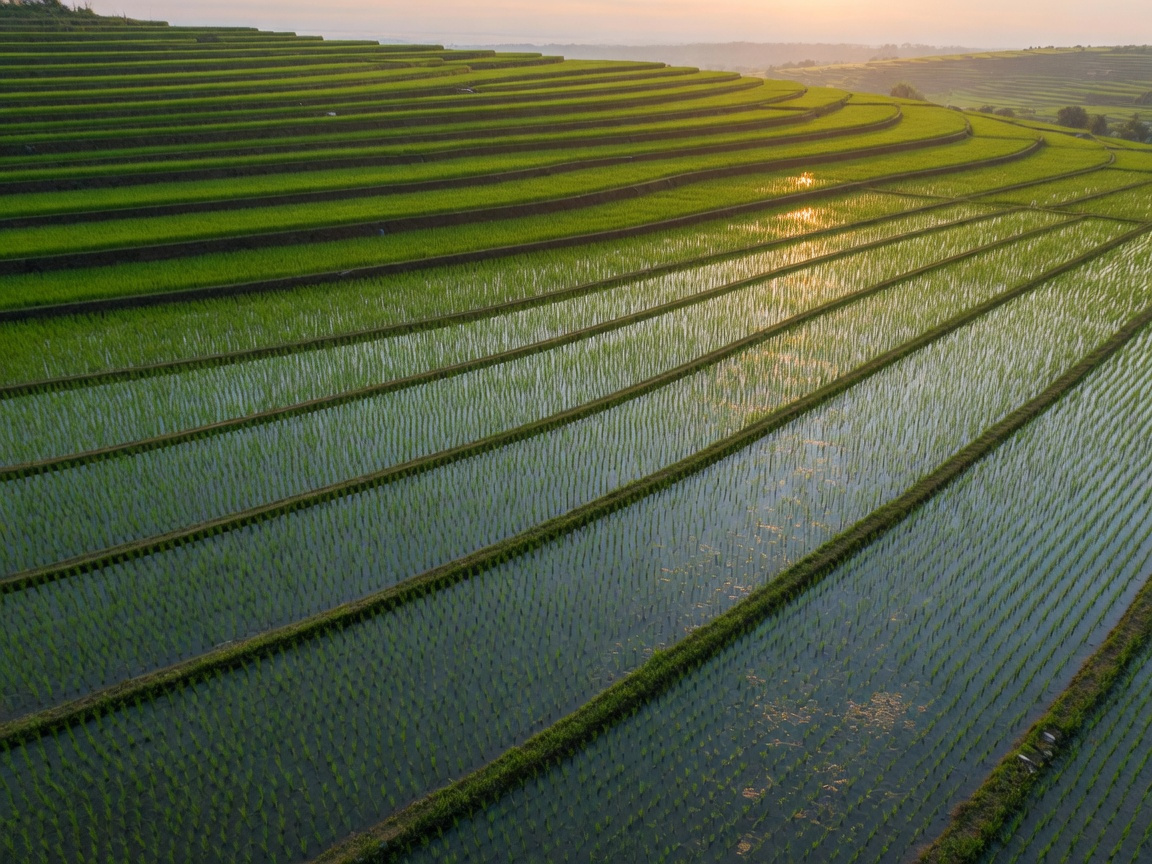

You can grow rice for a sustainable supply by choosing the right variety, feeding your soil organically, managing water efficiently, and rotating your crops wisely. These seven proven methods work as a system, keeping your plot productive season after season without burning through the land, water, or budget it depends on.
Some of the links in this article may be affiliate links. If you make a purchase through these links, we may earn a small commission at no extra cost to you. Thank you.
Key takeaways from this guide:
- Rice provides more than 20% of daily calories for the global population, making sustainable production a pressing priority in 2026.
- Locally adapted, open-pollinated varieties outperform generic commercial seed in most growing conditions and allow year-on-year seed saving.
- Smart irrigation techniques such as Alternate Wetting and Drying can significantly cut water use without meaningfully reducing yields.
- Organic soil management, crop rotation, and natural pest control build long-term resilience that chemical-heavy systems simply cannot replicate.
Why Is Sustainable Rice Farming More Important Than Ever in 2026?
Rice is the most important staple crop on the planet. According to the Food and Agriculture Organization of the United Nations (FAO), rice provides more than 20% of the calories consumed globally each day — a figure that rises above 50% across much of South and South-East Asia. With over 160 million hectares under cultivation worldwide, it is also one of the most resource-intensive crops humans grow.
Conventional rice farming carries a heavy environmental footprint. Continuously flooded paddy fields are a significant source of methane — a greenhouse gas with roughly 80 times the short-term warming potential of carbon dioxide. Synthetic fertilisers and pesticides drain into waterways, disrupting aquatic ecosystems and degrading freshwater quality. Heavy flood irrigation draws down aquifers that take generations to replenish. In 2026, with climate variability increasing and freshwater supplies tightening across growing regions, these costs are harder to ignore than ever.
Sustainable rice farming is not a compromise on productivity. Research from the International Rice Research Institute (IRRI) consistently shows that farms using organic inputs, improved water control, and biodiversity-based pest management achieve yields comparable to conventional systems — while building soil health that compounds over time. The System of Rice Intensification (SRI), developed in Madagascar and rigorously studied by researchers at Cornell University and IRRI, offers perhaps the most compelling evidence: farms adopting SRI principles have consistently reported substantial yield gains compared to conventional transplanting, while using significantly less water and seed. The evidence base is large and growing.
Whether you are farming at scale or growing rice in a back garden raised bed, the seven methods below give you a proven, practical framework for doing it sustainably.
Method 1 — Which Rice Variety Should You Choose for Your Conditions?
The most consequential decision you will make is variety selection. Rice is extraordinarily diverse — scientists at IRRI have catalogued more than 40,000 distinct varieties in their gene bank alone. That diversity exists because rice has been carefully selected by farmers across vastly different climates, soils, and water regimes for thousands of years. The right variety for your specific conditions almost certainly exists; the challenge is finding it.
Start with geography. Short-grain japonica varieties thrive in cool, temperate climates — northern Italy, Japan, and parts of the United States have grown them successfully for over a century. Long-grain indica varieties perform far better in tropical and subtropical heat. Aromatic types such as jasmine or basmati need warm nights and specific day-length triggers to develop their characteristic fragrance, and they can be disappointing in climates that cannot provide those conditions.
Beyond climate, think carefully about water availability. If reliable irrigation is limited, drought-tolerant upland varieties are your most resilient option. If your land is prone to seasonal inundation, flood-tolerant varieties with submergence resistance are far more reliable than standard types. Local agricultural extension services or regional seed-saving networks are invaluable at this stage — they can tell you which varieties have performed consistently over many seasons in your area, saving you from costly trial and error.
For long-term sustainability, open-pollinated varieties are strongly preferred over hybrid seed. Unlike hybrids, open-pollinated plants produce offspring that closely resemble their parents, meaning you can save seed from your best-performing plants and replant it the following year at no additional cost. This closes the loop on one of the most important inputs in the whole system. The principles behind selecting crops that reliably come true from saved seed apply directly to rice variety selection and are well worth understanding before your first sowing season.
Method 2 — How Do Organic Fertilisers Build a More Productive Rice Crop?
Rice is a hungry crop. Over a full growing season, a single hectare draws down roughly 80–100 kg of nitrogen, 20–30 kg of phosphorus, and 80–100 kg of potassium from the soil. Replace those nutrients with synthetic fertilisers and you get a short-term fix — but soil biology slowly degrades, making the crop ever more dependent on external inputs each season. Organic fertilisation builds a different system entirely: one that strengthens itself over time.
Compost and well-rotted manure are the foundation of any organic programme. Applied to the field 2–4 weeks before planting, they introduce a broad spectrum of nutrients in slow-release form while simultaneously improving soil structure and water retention. A typical application of 4–8 tonnes per hectare is sufficient to maintain fertility on reasonably healthy land, reducing or eliminating the need for synthetic supplementation.
Green manures offer a particularly elegant nitrogen solution. Fast-growing leguminous plants such as sesbania, cowpea, or sunn hemp are sown directly onto the prepared field 4–6 weeks before transplanting. At or just before flowering, they are cut and incorporated into the top 10–15 cm of soil. As they decompose, they release 40–80 kg of nitrogen per hectare — the equivalent of a meaningful bag of synthetic fertiliser, at virtually no cash cost and with direct benefit to soil structure and biology.
The living organisms in your soil — bacteria, fungi, earthworms, and nematodes — are the machinery that transforms organic matter into plant-available nutrients. Feeding them well is just as important as feeding the rice itself. Understanding how to support beneficial microbes through sustainable soil cultivation will significantly amplify the results of every organic input you apply, season after season.
Method 3 — What Is the Best Approach to Water Management in Rice Cultivation?
Water management is where sustainable rice farming can make its greatest environmental impact. Rice production globally accounts for a substantial share of all agricultural irrigation water — a figure that reflects the crop’s traditional association with continuous flooding. The challenge for 2026 and beyond is maintaining excellent yields while dramatically reducing that footprint. The good news is that proven techniques exist to do exactly that.
Alternate Wetting and Drying (AWD) is the most widely adopted water-saving method for lowland paddy rice. Rather than keeping the field permanently flooded, AWD involves allowing the soil to dry to a controlled depth — typically 15–20 cm below the surface, measured with a simple perforated monitoring tube — before re-irrigating. Research consistently shows AWD can substantially reduce both water consumption and methane emissions from the field, while keeping yields close to continuously flooded benchmarks. It is now officially endorsed by the FAO and IRRI as the primary water-saving recommendation for lowland rice growers worldwide.
For upland or container-grown rice, drip irrigation is the practical equivalent. Drip lines deliver water precisely to the root zone, eliminating surface evaporation and preventing the waterlogged, anaerobic conditions that encourage fungal disease. Upland varieties managed on drip irrigation can thrive on roughly half the water a flooded paddy consumes per season.
Water quality is a factor home growers sometimes overlook entirely. Hard water, heavily chlorinated tap water, or water with high mineral content can affect soil pH and nutrient availability over time. Knowing what total dissolved solids mean for your garden water — and how to test your irrigation source — gives you a useful baseline before you commit to a supply for the whole season.
Method 4 — How Do You Protect Rice From Pests and Diseases Without Harsh Chemicals?
Rice blast is the single most destructive disease in global rice production, capable of destroying entire crops when conditions favour it. Brown planthoppers, stem borers, and leaf folders are among the most damaging insect pests. In conventional systems, these threats are typically met with synthetic fungicides and insecticides — but that approach creates resistant pest populations, destroys beneficial insects, and leaves chemical residues in food and waterways. Sustainable management builds a more resilient natural defence that improves with every season.
Integrated Pest Management (IPM) is the standard framework. Research from IRRI has shown that rice paddies naturally host sufficient predator populations — spiders, parasitic wasps, and dragonflies — to control planthoppers effectively when insecticide applications are minimised. IPM works in four coordinated layers:
- Cultural controls first: choose disease-resistant varieties, maintain correct plant spacing for airflow, and avoid excessive nitrogen applications, which produce soft, pest-attractive tissue.
- Biological controls second: encourage natural predators by reducing or eliminating broad-spectrum pesticide use. Providing flowering habitat around the field margins actively attracts beneficial insects.
- Pheromone and physical traps third: sticky yellow traps and pheromone lures intercept adult stem borer moths before they can lay eggs, breaking the reproductive cycle without any chemical input.
- Targeted intervention only when necessary: if chemical action is unavoidable, use narrow-spectrum products applied precisely at the right growth stage, and never apply during flowering when pollinators are active.
Crop rotation is the most effective disease management tool at your disposal. Rotating rice with legumes or vegetables for at least one season removes the host crop and allows soil pathogen populations to decline naturally. A well-planned rotation that includes a non-rice phase every 2–3 seasons will reduce blast and blight incidence significantly, without any chemical input at all.

Method 5 — Why Are Transplanted Seedlings Better Than Direct Seeding for Sustainable Rice?
Starting your crop from transplanted seedlings, rather than broadcasting seed directly into the main field, gives your rice a meaningful competitive head start. Seedlings that are 20–30 days old at transplanting have already developed substantial root systems and above-ground biomass. They establish quickly in the main field, shade out weeds earlier, and handle early-season weather variability far better than germinating seeds exposed to the elements.
From a resource efficiency standpoint, nursery-based transplanting uses seed dramatically more effectively than direct seeding. Broadcasting seed directly into a paddy field in traditional systems requires 60–80 kg of seed per hectare. Transplanting from a well-managed nursery bed typically requires just 20–40 kg — a saving of 50% or more. When you are working with carefully saved open-pollinated seed, that efficiency is particularly valuable.
Growing your own seedlings is simpler than it sounds. Soak your seed in clean water for 24 hours to promote even germination, then spread it densely on a prepared nursery bed enriched with compost and well-drained. Keep the bed consistently moist and shaded from intense sun during the first week. After 20–25 days, your seedlings will stand 15–20 cm tall with 3–4 leaves and healthy white roots — the ideal transplanting stage. Handle them gently during transplanting to minimise root damage, which can create entry points for disease.
Method 6 — How Does Growing Different Crops Alongside Rice Strengthen the Harvest?
A field that grows only rice, season after season, is constantly depleting the same set of nutrients, amplifying the same pest populations, and losing the biological diversity that makes soils genuinely resilient. Crop diversity — through seasonal rotation and, where appropriate, intercropping — breaks those damaging patterns and builds an agricultural ecosystem that sustains high production without ever-escalating inputs.
The rice–legume rotation is the most accessible starting point for most growers. After harvesting your rice, plant a nitrogen-fixing legume such as mung beans, cowpeas, or faba beans. Rhizobium bacteria in the legume roots pull atmospheric nitrogen and fix it in the soil, ready for the following rice crop. Trial sites across tropical Asia have recorded meaningfully higher rice yields in the season following a legume rotation, compared to continuous rice cropping — a dividend that costs nothing beyond the price of the legume seed.
Intercropping offers additional possibilities in suitable settings. Growing vegetables, aromatic herbs, or fast-maturing root crops in the raised bunds around paddy fields makes productive use of space that would otherwise support weeds. In some Asian farming systems practised for over 2,000 years, ducks or fish are introduced to flooded paddies, where they forage on weeds and pest insects while fertilising the water — producing two food outputs from a single piece of land.
Even modest additions around the edges of your plot contribute to biodiversity. If you are exploring complementary growing at home, it is worth trying growing green onions or scallions as border plants alongside your rice — they are straightforward to manage, genuinely useful in the kitchen, and make excellent productive use of otherwise wasted edge space.
Method 7 — Which Soil Conservation Practices Should Every Rice Grower Know?
Soil is the irreplaceable foundation of every rice harvest. Lose it through erosion or degrade it through compaction and over-cultivation, and no amount of fertiliser will restore what took centuries to form. The reassuring reality is that soil conservation practices are mostly low-cost and low-labour — they require forethought rather than significant expenditure, and their benefits accumulate quietly from one season to the next.
Contour planting: on any sloped land, following the natural contours rather than planting in straight lines up and down the hillside significantly reduces the speed of surface water runoff. Water slows as it crosses contour lines, giving it time to infiltrate the soil rather than carry your topsoil downhill. Contour planting alone can substantially reduce erosion on moderately sloped land — a significant return for a simple change in planting direction.
Cover cropping: leaving soil bare after harvest is an open invitation to erosion and weed establishment. Sowing a fast-growing cover crop — rye, buckwheat, or a legume mix — within a few days of the rice harvest protects the soil surface through the dormant season. Cover crop roots also maintain pore structure and channel organic matter deeper into the profile, improving drainage and aeration for the following crop.
Mulching: instead of burning rice straw after harvest — a practice that releases significant carbon dioxide and nitrogen oxides while destroying valuable organic matter — spread it back across the field as surface mulch or incorporate it shallowly into the soil. Straw mulch conserves moisture, moderates soil temperature, suppresses weed germination, and slowly breaks down into organic matter through winter. Alternative mulch materials such as coconut coir are particularly effective in raised-bed or container rice systems, where moisture retention between watering sessions is otherwise a persistent challenge.
Minimum tillage: deep ploughing breaks up soil aggregates, severs fungal networks, and accelerates the decomposition of organic matter that took years to build. Wherever practical, use shallow cultivation — just enough to incorporate organic material and prepare a seedbed — rather than inverting the full soil profile. Paired with green manure incorporation and organic mulching, minimum tillage builds measurable organic matter year on year.
What Does a Full Sustainable Rice Growing Season Look Like?
Understanding the complete growing cycle helps you plan each sustainable input at exactly the right moment. Here is a typical timeline for a transplanted lowland rice crop, from nursery preparation through to post-harvest rotation management. Total growing time ranges from 100 to 150 days depending on variety and local climate conditions.
| Growing Stage | Approximate Timing | Key Sustainable Actions |
|---|---|---|
| Nursery preparation | Days 1–7 | Soak open-pollinated seed; prepare compost-enriched nursery bed with good drainage |
| Field preparation | Days 7–21 | Incorporate green manure or compost; shallow till; test and assess irrigation water source |
| Transplanting | Days 20–30 | Transplant 20–30 day seedlings at correct spacing (typically 20 × 20 cm); begin AWD irrigation cycle |
| Vegetative stage | Days 30–70 | Monitor pests via IPM checklist; apply liquid organic top-dress if growth is slow |
| Flowering / panicle initiation | Days 70–90 | Maintain adequate soil moisture; suspend all pesticide applications during pollination |
| Grain fill | Days 90–110 | Reduce irrigation; monitor closely for blast disease and brown planthopper pressure |
| Harvest | Days 100–150 | Harvest at 80–85% golden grain maturity; retain all straw for mulch or composting |
| Post-harvest rotation | Days 150–180 | Sow legume cover crop immediately after harvest; plan next season’s variety and rotation |

Frequently Asked Questions About Growing Rice Sustainably
How long does it take to grow rice from seed to harvest?
Most rice varieties take between 100 and 150 days from sowing to harvest. Short-season varieties bred for cooler or temperate climates can mature in as few as 90 days, while some long-season aromatic varieties take up to 160 days to reach full grain maturity. The most useful way to track progress is to count from transplanting day rather than sowing day — from transplanting, the majority of lowland varieties reach harvest readiness in 75–120 days depending on temperature and day length.
Is it really possible to grow rice without flooding the field?
Absolutely. Upland rice varieties are specifically bred for non-flooded conditions and can be grown exactly like any other grain crop, given regular irrigation or sufficient rainfall. They need consistent moisture throughout the season but do not require standing water at any point. Container and raised-bed growers successfully produce rice in consistently moist but unflooded growing media. The trade-off is that upland systems require more attentive weed management, since the water layer that naturally suppresses weeds in a paddy is no longer present.
What is the best organic fertiliser for rice?
Compost and well-rotted manure are the most versatile and widely accessible options, and they do double duty as soil conditioners as well as nutrient sources. For a substantial nitrogen boost, green manure incorporated 2–3 weeks before planting is hard to beat — it is effectively free if you grow it yourself and releases nitrogen steadily as it decomposes. Fish emulsion and seaweed extracts make effective supplementary liquid feeds during the vegetative growth stage. If you can only source or produce one input, compost delivers the best combination of nutrient supply, water retention improvement, and biological activity support in a single application.
Can I grow rice in the UK or another temperate climate?
Yes — with the right variety and a warm, sheltered growing position. Rice needs consistent temperatures above 20°C for most of its growing season and is sensitive to late spring or early autumn frosts. In the UK, growing in a greenhouse or polytunnel significantly extends the viable season and provides the sustained warmth the crop needs to reach grain maturity. Short-grain japonica and Italian Arborio types are the most reliable choices for temperate conditions. Growing in containers gives you the added flexibility of moving plants under cover if unexpected cold snaps hit during early summer or late August.
How can I steadily improve my rice yield from season to season?
Building soil organic matter is the most reliable route to long-term yield improvement. Each percentage point increase in soil organic matter improves water retention, nutrient availability, and biological activity — all of which translate directly into healthier plants and heavier grain counts at harvest. Keeping a simple field diary that records your inputs, irrigation dates, pest observations, and final harvest weight gives you the data to identify what is actually driving change. Variety selection refinement and water management fine-tuning tend to produce the largest gains within a single season; organic soil building works more quietly but compounds powerfully over multiple growing cycles.
What should I do with rice straw after the harvest?
Do not burn it. Rice straw burning is still widely practised across parts of Asia but it is a significant source of air pollution and greenhouse gas emissions, and it permanently destroys the organic matter that should be returned to the soil. Instead, chop the straw and spread it as a surface mulch, incorporate it shallowly into the soil immediately after harvest, or add it to your compost heap. Straw returned to the field takes 3–6 months to break down fully, but it adds meaningful organic matter with every cycle. It can also be repurposed as animal bedding, fodder, or even as a growing substrate for oyster mushrooms — making it one of the most versatile by-products in the sustainable garden.
Your 30-Day Action Plan for Getting Started With Sustainable Rice Growing
Growing rice sustainably is genuinely achievable whether you have a large raised bed or several acres of lowland field. The seven methods above are not a checklist to tick off once — they form an integrated system that builds on itself, getting stronger and more productive with each growing season. Here is a practical 30-day plan to start on the right foot.
- Days 1–3: Research open-pollinated rice varieties suited to your climate. Contact a local agricultural extension office, heritage seed library, or regional seed-saving network to get targeted variety recommendations and source your first seed.
- Days 1–7: Test your soil pH and basic nutrient levels (simple test kits are widely available) and assess your irrigation water source. This baseline tells you precisely what your organic fertiliser programme needs to address before planting.
- Days 7–14: Prepare your growing area. Apply compost or sow a fast-growing green manure if the timing allows, and allow 2 weeks for it to begin breaking down. Plan your water delivery approach — AWD monitoring tube for paddy, drip lines for upland or container growing.
- Days 14–21: Soak your seed and establish your nursery bed. Mark the transplanting date on the calendar and set a reminder to check seedling development daily.
- Days 21–30: Transplant your seedlings at the correct spacing. Start your AWD or drip irrigation schedule from day one, and open your field diary on the same afternoon.
- Season-long: Observe and record. Rice communicates what it needs through leaf colour, tiller count, and growth rate. The more seasons you grow, the more fluent that language becomes — and the better your results will be.
Sustainable rice farming is not a sacrifice of productivity for principle. It is a smarter, more durable approach to getting the best from your land over the long term. Start with two or three of the seven methods if the full system feels like a lot to take on, and add more each growing season. Within a few cycles, you will have a rice plot that is genuinely self-reinforcing: healthier soil, lower input costs, and a reliable harvest that never compromises the next one.