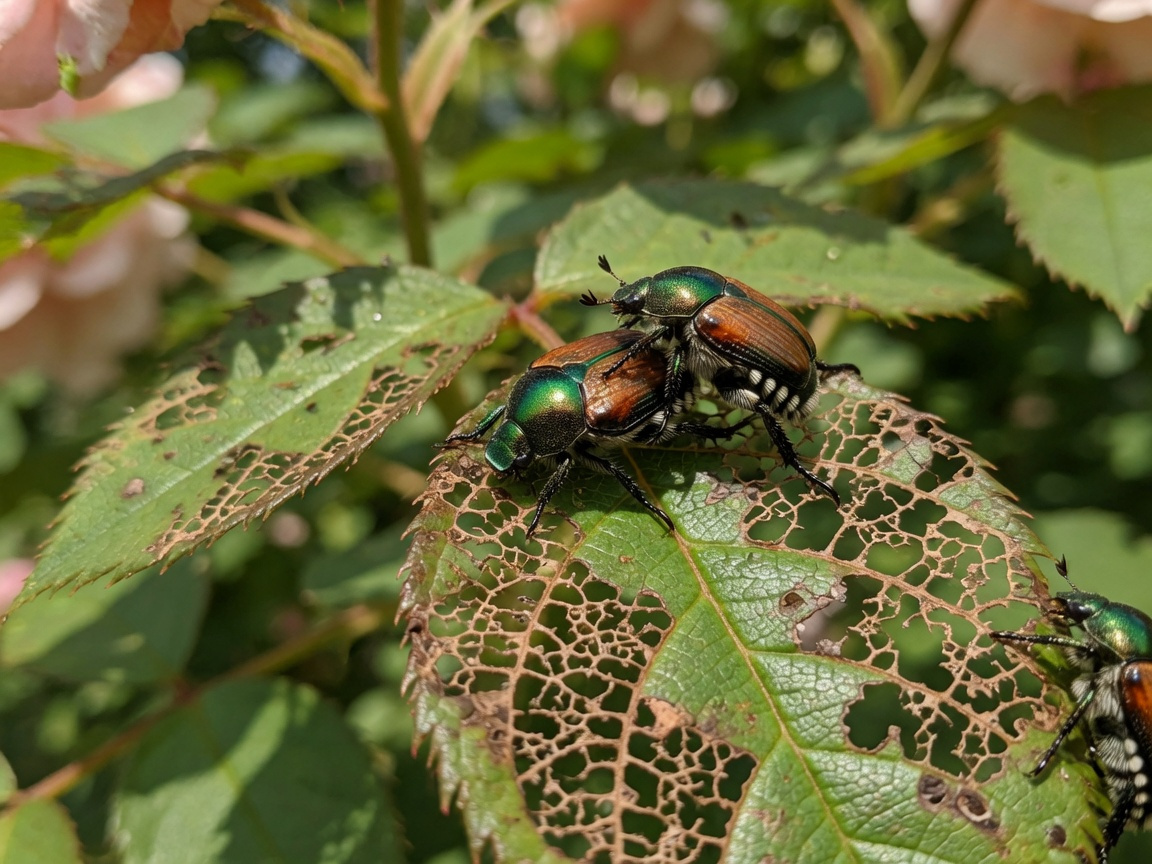

Japanese beetles can strip a healthy plant bare within days, attacking more than 300 species of garden plants, trees, and shrubs with ruthless efficiency. The most effective strategy is a layered one: remove adults by hand or with targeted sprays, deter feeding with organic treatments like neem oil, and treat the soil in late summer to destroy next year’s grubs before they ever emerge.
Some of the links in this article may be affiliate links. If you make a purchase through these links, we may earn a small commission at no extra cost to you. Thank you.
Key Takeaways
- Japanese beetles (Popillia japonica) have spread to more than 45 US states since arriving in New Jersey in 1916, causing an estimated $460 million in annual damage
- Adults are most active from late June through mid-August — acting during the first two weeks of emergence gives you the biggest return on your effort
- The most effective control combines physical removal, organic deterrents such as neem oil, and soil treatments that target grubs before they hatch into next year’s adults
- Late-summer grub treatment (August–September) disrupts next season’s population at its most vulnerable stage
What Are Japanese Beetles and Why Are They Such a Problem?
Japanese beetles (Popillia japonica) are an invasive insect species native to Japan, where natural predators keep their numbers in reasonable check. When they arrived in the United States in 1916 — believed to have hitched a ride on ornamental nursery stock imported to New Jersey — they encountered almost no native enemies. The result was explosive population growth that continues more than a century later.
Today they’re present in more than 45 US states, with the heaviest infestations concentrated in the Northeast, Mid-Atlantic, and Midwest. The USDA estimates Japanese beetles cause over $460 million in damage to US lawns, gardens, and agricultural crops every year, making them one of the most costly landscape pests in the country. Everything from roses and grapevines to linden trees and raspberry canes falls within their appetite.
What makes them particularly destructive is their collective behaviour. As beetles feed, they release aggregation pheromones that signal to others that a food source is available. A plant that attracts one or two beetles can draw dozens or even hundreds within 24 hours. They consume the soft tissue between leaf veins — a process called skeletonising — leaving foliage lacy, brown, and structurally weakened. In severe cases, a shrub can be fully defoliated in less than a week. Their larval stage (white grubs) causes equally serious damage below ground, feeding on grass and plant roots through autumn and into spring.
How Do You Identify Japanese Beetles in Your Garden?
Correct identification is the foundation of effective control. Adult Japanese beetles are about ½ inch (12 mm) long and unmistakable once you know what you’re looking for. They have a metallic green head and thorax, copper-brown wing covers (elytra), and — most distinctively — a row of six small white hair tufts along each side of the abdomen, with two additional tufts at the tail. Their iridescent sheen catches sunlight even from across the garden on a bright morning.
It pays to know how they differ from similar species. The green June beetle (Cotinis nitida) is noticeably larger and lacks the white tufts. Some ground beetles and fig beetles carry a comparable metallic sheen but differ in body shape and proportions. When you’re uncertain, look for those white abdominal tufts — they’re unique to this species and the most reliable field identification marker available.
Grubs (larvae) are C-shaped, creamy white, and roughly ¾ to 1 inch long when fully grown. They live underground and are most easily found by digging into lawn soil in late summer and early autumn. Finding 10 or more grubs per square foot of turf is the threshold that typically warrants active treatment. For a thorough overview of the beetle and its habits, this dedicated guide to identifying and managing Japanese beetles makes a helpful companion read alongside this one.
What Does Japanese Beetle Damage Look Like?
Skeletonised leaves are the signature sign of Japanese beetle feeding. Unlike caterpillar damage, which creates ragged holes, or slug damage, which eats along leaf edges, Japanese beetles consume the soft tissue between veins in a methodical pattern, leaving behind a papery brown network of veins. Affected foliage looks scorched, crumbles when touched, and can no longer photosynthesize effectively.
Roses, grapevines, Japanese maple, linden, and raspberry canes are among their most targeted hosts. Research from university extension programmes has found roses can lose up to 80% of their foliage during a heavy infestation, and grapevines may lose enough leaf area to reduce fruit sugar development significantly in the same season. Beetles also attack flowers and ripening fruit directly — strawberries and peaches are particularly vulnerable, often becoming unmarketable within days of beetle feeding beginning in earnest.
On lawns, the damage comes from the grub stage rather than the adults. Larvae chew through grass roots just below the surface, killing turf in irregular brown patches that feel spongy underfoot and peel back like loose carpet. A useful secondary indicator is wildlife activity — skunks, raccoons, crows, and starlings digging into your lawn are often searching for grubs and can signal a subsurface infestation even before visible turf damage appears.
When Are Japanese Beetles Most Active — and Why Does Timing Matter?
Adult Japanese beetles typically emerge from the soil in late June. Populations peak through July and begin declining by late August. Each adult lives for approximately 30 to 45 days, but because emergence is staggered, active beetles may be present for up to eight weeks in a single season. The first two weeks of emergence — before populations reach their peak — are your most effective control window. Early intervention when numbers are still building is far easier than managing a full-blown infestation mid-July.
Temperature plays a significant role in beetle behaviour. Adults are most active when daytime temperatures exceed 85°F (29°C) and become sluggish below 60°F (15°C). Early-morning control efforts — ideally before 7 AM — exploit this temperature sensitivity directly. At cooler morning temperatures, beetles grip foliage loosely and are reluctant to fly, making hand-picking far more efficient and far less frustrating.
Grubs follow their own seasonal window. They hatch from eggs in mid-to-late August, feed actively near the soil surface through September, and then burrow deeper to overwinter. They’re most vulnerable to biological and chemical treatments when they’re young (August–September) and close to the surface. By November, they’ve moved too deep for most surface-applied treatments to reach them effectively. Matching your treatments to these life-stage windows makes a measurable difference in their impact.
How Can You Prevent Japanese Beetles Before They Strike?
Prevention is always more cost-effective than reactive control. Several strategies work together to make your garden less attractive to adult beetles and less hospitable to their grubs in the soil below.
- Choose resistant plants strategically. Japanese beetles show clear feeding preferences. They’re strongly attracted to roses, linden, basil, Virginia creeper, and grapevines, while largely avoiding boxwood, holly, forsythia, dogwood, and most ferns. Planting deterrent species such as marigolds, catmint, and catnip near vulnerable plants creates a natural buffer that reduces how readily beetles settle in.
- Build healthy soil with organic matter. Vigorous, well-nourished plants tolerate pest pressure better than stressed ones. Enriching soil structure also supports populations of beneficial nematodes and soil microorganisms that naturally suppress grubs. Incorporating high-quality vermicompost into your beds is one of the most sustainable long-term investments you can make for pest resilience across your whole garden.
- Maintain thick mulch in garden beds. Japanese beetle females prefer to lay eggs in bare, moist, warm soil — particularly open lawn and bed areas. Consistent mulch coverage in garden beds discourages egg-laying, reduces attractive egg-laying sites, and helps retain moisture for your plants at the same time.
- Position pheromone traps well away from the garden. Commercial lure traps attract beetles effectively, but research shows they can draw in more beetles from surrounding areas than they actually catch. If you use them, place traps at least 30 feet (9 metres) from any plant you want to protect and empty the collection bag daily during peak season.
- Till garden beds in autumn. Turning over soil after the growing season disrupts grub habitat, exposes larvae to birds and freezing temperatures, and interrupts the overwintering cycle. It’s a low-tech but genuinely effective step — and it benefits weed control too, as explored in this practical guide to getting the most from seasonal tilling.
What Are the Best Natural and Organic Control Methods?
For gardeners who prefer to keep things chemical-free, a range of organic options provide meaningful control — especially when combined and applied consistently through the season.
Hand-Picking
The most immediate and zero-cost method is knocking beetles into a bucket of soapy water. Work early in the morning (before 7 AM) when cool temperatures make beetles slow and reluctant to take flight. Hold the container beneath the plant, then shake or flick the beetle in — at low temperatures it drops rather than flies. The soap breaks the water’s surface tension and prevents escape. Daily hand-picking during the first two weeks of emergence, when populations are still building, makes a significant dent in the total season’s pressure on your plants. It’s time-consuming but highly effective on smaller gardens.
Neem Oil
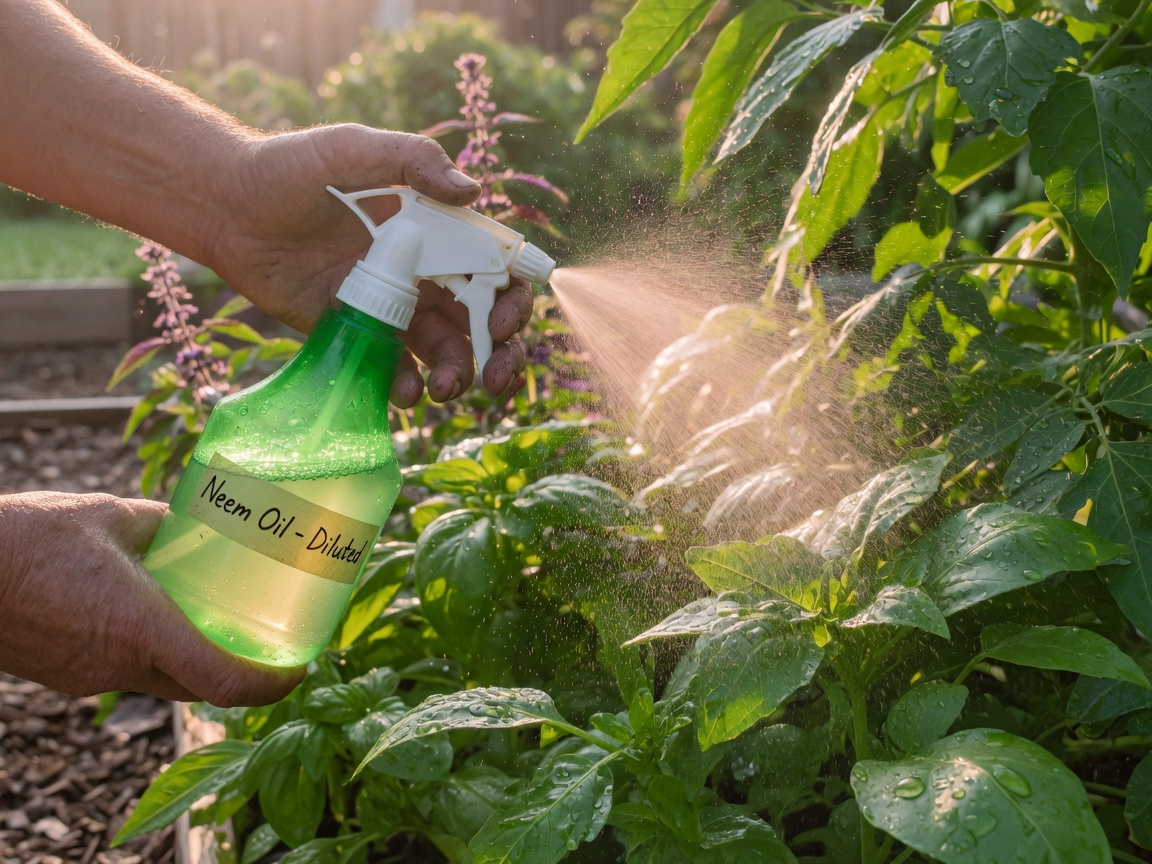
Neem oil, derived from the seeds of the neem tree (Azadirachta indica), is one of the most widely recommended organic treatments for Japanese beetles. Its active compound, azadirachtin, disrupts feeding behaviour and interferes with larval development. Applied to foliage, it acts as a deterrent — beetles find neem-coated surfaces unpalatable and tend to move elsewhere. It has a low toxicity profile for mammals and breaks down relatively quickly in the environment, making it a good choice around edible crops.
For best results, mix neem oil concentrate (approximately 2 tablespoons per gallon of water) with a few drops of liquid dish soap to emulsify it, then apply using a garden sprayer to coat both upper and lower leaf surfaces. Spray in the early morning or evening to avoid leaf scorch and minimise contact with foraging bees. Reapply every seven to 14 days during the active beetle season, and immediately after rainfall. Cooperative Extension services across the US consistently recommend neem oil as a first-line organic treatment for this pest.
Kaolin Clay
Kaolin clay creates a fine white mineral coating on plant surfaces that physically disorients beetles and deters feeding. University extension research has demonstrated that kaolin clay can reduce Japanese beetle feeding damage by up to 50% on susceptible crops. It washes off in heavy rain and needs reapplication, but it’s food-safe and approved for organic use — making it particularly well suited to edible crops where chemical residues are a concern. Surround WP is the most widely available commercial formulation.
Companion Planting as a Deterrent
Planting garlic, chives, tansy, rue, and catnip near vulnerable plants can reduce beetle landing rates through olfactory disruption. White geraniums and marigolds can serve as trap crops — beetles find them highly attractive, so planting them at the garden’s edge draws beetles away from higher-value plants to a location where removal is more manageable. This approach works best as one layer in a broader strategy rather than a standalone solution.
How Do You Use Milky Spore and Beneficial Nematodes Effectively?
Two biological soil treatments deserve special attention because they target the grub stage — disrupting next year’s beetle population before it surfaces. Used together, they provide both immediate and long-lasting suppression from a single late-summer effort.
| Control Method | Target Life Stage | Best Application Window | Reapplication Needed |
|---|---|---|---|
| Neem oil spray | Adults (feeding deterrent) | June–August | Every 7–14 days |
| Milky spore granules | Grubs | Late summer / early autumn | Once (lasts up to 20 years) |
| Beneficial nematodes | Grubs | August–September | Annually |
| Kaolin clay | Adults (physical barrier) | June–August | After each heavy rainfall |
| Hand-picking | Adults | June–August (early morning) | Daily |
Milky Spore (Paenibacillus popilliae)
Milky spore is a naturally occurring soil bacterium that infects and kills Japanese beetle grubs. When a grub ingests the spores, it dies and releases billions of new spores back into the soil, progressively building a denser spore bank with each cycle. Once well-established, milky spore can remain active in soil for up to 20 years, making it one of the most cost-effective long-term investments in organic pest management available to home gardeners. Apply granular or powder formulations to lawn areas in late summer, when young grubs are feeding actively near the surface. Water lightly after application to move spores into the root zone. One key caveat: milky spore works exclusively on Japanese beetle grubs — not on grubs from other beetle species.
Beneficial Nematodes
Steinernema carpocapsae and Heterorhabditis bacteriophora are parasitic nematodes that actively seek out soil-dwelling grubs. They enter the host’s body and release bacteria that kill it within a few days. For success, apply to pre-moistened soil at temperatures above 60°F (15°C) — nematodes travel through water films in soil pores, and dry or cold conditions halt their movement entirely. Water the lawn before and after application to maintain moisture. Purchase from a reputable supplier with a current shelf-life date; live nematodes stored at incorrect temperatures lose viability quickly. Plan annual reapplication each August to sustain the effect over time.
A single milky spore application in late summer can suppress Japanese beetle grub populations for up to 20 years — one of the most cost-effective long-term investments available to the home gardener.
Which Insecticides Work Best Against Japanese Beetles?
When organic methods aren’t keeping pace with a heavy infestation, targeted insecticide use can provide fast and reliable knockdown. Choosing the right product for the situation — and applying it responsibly — keeps collateral impact on beneficial insects and the wider garden to a minimum.
Pyrethrin-Based Sprays
Derived from chrysanthemum flowers, pyrethrins provide quick knockdown of adult beetles with relatively low mammalian toxicity. They degrade within hours to a few days in the environment, making them a solid choice when you want fast action without persistent chemical residue. Apply in the evening to reduce bee exposure. Because of their short residual activity, reapplication every few days during peak season is typically necessary.
Spinosad
Spinosad is a biologically derived insecticide produced from naturally occurring soil bacteria. It’s effective against adult Japanese beetles and breaks down in sunlight within a few days, giving it a lower environmental profile than most synthetic alternatives. Several certifying bodies approve it for organic use, though it should still be applied in the evening — it can harm bees during active foraging hours.
Carbaryl (Sevin)
Carbaryl is a broad-spectrum synthetic insecticide effective against Japanese beetles but also toxic to bees, beneficial insects, and aquatic organisms. Use it only when other methods have proven insufficient, apply in the evening, and never spray on open flowers. Always follow label instructions exactly — exceeding recommended rates increases harm to non-target species without meaningfully improving beetle control.
Imidacloprid (Systemic Soil Treatment)
Applied as a soil drench or granule, imidacloprid is taken up through plant roots and distributed throughout all plant tissues, rendering them toxic to feeding insects for several weeks from a single application. It’s effective and long-lasting, but poses significant risks to pollinators when used on flowering plants. The US Environmental Protection Agency has flagged imidacloprid as a substance of concern for pollinator health. Restrict its use to non-flowering ornamentals and apply well before flowering begins. Read and follow the product label in full.
How Do You Target Grubs to Stop Next Year’s Infestation?
Grub control in late summer is the single most strategic action you can take against Japanese beetles. You’re not fighting this year’s adults — you’re preventing next year’s from ever emerging. Here’s a practical seasonal timeline:
- August: Apply milky spore granules and/or beneficial nematodes to lawn areas. Newly hatched grubs are young, small, and feeding actively close to the soil surface — their most vulnerable stage. Water the lawn before and after nematode application to keep them mobile in the soil. Soil temperature should be above 60°F (15°C) for nematodes to function effectively.
- September: Assess grub populations by cutting and peeling back 1-square-foot sections of turf in several locations. Consistently finding 10 or more grubs per square foot is the threshold where adding a chemical grub treatment is justified. Products containing chlorantraniliprole are widely recommended by Cooperative Extension services as effective and significantly less harmful to non-target species than older synthetic options. Apply to moist soil and water in thoroughly.
- October–November: Till garden beds and borders to expose overwintering grubs to surface predators and frost. Robins, starlings, crows, and skunks will readily consume exposed grubs — a rare instance where wildlife foraging in your garden is genuinely working in your favour.
- Following spring (April–May): Monitor for adult emergence in late June. A successful grub treatment the previous autumn should produce a noticeable reduction in adult beetle numbers. Continue annual nematode applications each August to sustain the effect over time.
If beetle activity has taken a toll on your planting this season, autumn is a natural opportunity to rebuild with resilient, productive species. This guide to the best plants to grow in a fall garden offers plenty of ideas for filling gaps and getting your beds back on track for next year.
Which Plants Are Naturally Resistant to Japanese Beetles?
Choosing beetle-resistant plants is one of the most effective long-term strategies available. It won’t eliminate beetles entirely — adults are strong fliers and will pass through from neighbouring gardens — but it substantially reduces the damage they cause and the time you spend on active control each summer.
Resistant Trees and Shrubs
- Boxwood (Buxus spp.)
- Holly (Ilex spp.)
- Forsythia
- Dogwood (Cornus spp.)
- Red maple (Acer rubrum)
- Northern red oak (Quercus rubra)
- Arborvitae (Thuja spp.)
- Lilac (Syringa spp.)
Resistant Perennials and Annuals
- Daffodils (Narcissus spp.)
- Foxglove (Digitalis spp.)
- Bleeding heart (Lamprocapnos spectabilis)
- Coreopsis
- Lantana
- Marigolds
- Larkspur (Delphinium consolida)
- Catmint (Nepeta spp.)
Most Susceptible Plants to Protect
Japanese beetles are strongly attracted to roses, linden trees (Tilia spp.), Japanese maple (Acer palmatum), grapevines, raspberries, basil, and Virginia creeper. If you grow any of these, begin protective measures proactively at the start of each beetle season rather than waiting for damage to appear. In a heavy year, the difference between early intervention and a wait-and-see approach can be the difference between a recoverable garden and a devastated one. Growing these alongside less attractive companion plants, while maintaining healthy soil and consistent autumn tilling, reduces the overall burden year on year.
What Is the Best Seasonal Japanese Beetle Control Plan for 2026?
The most successful gardeners treat Japanese beetle control as a year-round cycle rather than a summer crisis. Here’s how the whole season fits together into a practical, repeatable plan:
- Late June: Begin daily monitoring. Start hand-picking and apply your first neem oil treatment. These first two weeks are your highest-leverage window — populations are building but haven’t peaked.
- July (peak season): Intensify control. Hand-pick daily, reapply neem oil or kaolin clay every seven to 14 days, and consider a pyrethrin or spinosad spray if numbers are high. Keep pheromone traps well away from vulnerable plants if you use them.
- August: Shift focus to the soil. Apply milky spore and/or beneficial nematodes to lawn areas while grubs are newly hatched and close to the surface. This is your most important action of the whole season for long-term suppression.
- September: Assess grub populations. Dig spot-checks across the lawn. Add a chemical grub treatment if warranted. Adult beetle activity should be tapering off by mid-month.
- October–November: Till garden beds to expose and disrupt overwintering grubs. Clear spent plant material to remove overwintering habitat for other pests too.
- Following spring: Plan any resistant plant additions or bed changes. An established milky spore population means you’re entering next season with a meaningful head start.
Research continues to advance in 2026, with Cooperative Extension services increasingly endorsing push-pull companion planting strategies and biocontrol agents beyond milky spore — including fungal pathogens such as Metarhizium anisopliae — showing promise in ongoing trials. USDA monitoring also confirms Japanese beetles continue spreading westward, with new populations established in parts of the Pacific Northwest. If you’re in a previously unaffected region, now is the time to learn identification and set up early-warning monitoring in your garden.
The fundamentals remain unchanged: identify accurately, act early, layer your controls, and treat the soil in late summer to break the cycle. The tools available are broadening, but the strategy stays the same — and that consistency, year over year, is what makes the difference.

Frequently Asked Questions About Japanese Beetles
What are Japanese beetles, and where did they come from?
Japanese beetles (Popillia japonica) are invasive insects native to Japan, where natural predators keep their populations in check. They arrived in the United States around 1916 on imported ornamental nursery stock in New Jersey, encountering almost no natural enemies. They’ve since spread to more than 45 US states and cause an estimated $460 million in damage to lawns, gardens, and agricultural land every year.
How do I know if Japanese beetles are damaging my garden?
The most recognisable sign is skeletonised leaves — the tissue between leaf veins eaten away, leaving a papery brown network. You may also see clusters of metallic green and copper beetles on plants, particularly in morning warmth. On lawns, irregular brown patches that feel spongy underfoot and lift away like loose carpet point to grub activity just below the soil surface.
What is the fastest way to get rid of Japanese beetles?
For immediate results, early-morning hand-picking into soapy water is fast and effective when numbers are manageable. For larger infestations, a pyrethrin or spinosad spray provides fast knockdown. Neem oil is the best organic option for ongoing suppression but requires consistent reapplication every seven to 14 days throughout the active beetle season — don’t skip applications after rain.
Are Japanese beetles harmful to humans or pets?
Japanese beetles themselves don’t bite or sting and pose no direct risk to humans or pets. However, some of the pesticides used to control them carry risks if mishandled. Always store treatments safely out of reach, follow label directions exactly, and keep pets off treated areas until foliage has fully dried or as specified on the product label.
Can I get rid of Japanese beetles permanently?
Complete, permanent elimination is unlikely — adults are strong fliers and can move into your garden from neighbouring properties or open countryside. However, consistent multi-year management — combining adult control each summer, annual grub treatment in late summer, and strategic resistant planting — can reduce populations to a level where damage is minimal. Once established, milky spore provides ongoing grub suppression for up to 20 years from a single application, making it one of the most durable long-term solutions available.
Do pheromone traps actually work?
Traps do attract and catch beetles, but research indicates they often draw in significantly more beetles from the surrounding area than they manage to capture — potentially worsening localised infestations rather than solving them. If you use pheromone traps, place them at least 30 feet (9 metres) from any plant you want to protect, empty bags daily at peak season, and treat them as one tool among several rather than a primary control method.
When should I start treating for Japanese beetles?
Start monitoring your garden in late June and begin treating adults as soon as you see them. The first two weeks of emergence are your most effective window — populations are still building and haven’t yet peaked. For grub control, schedule soil treatments for August through early September, when newly hatched larvae are young, small, and feeding actively close to the soil surface where biological and chemical treatments can reach them most effectively.