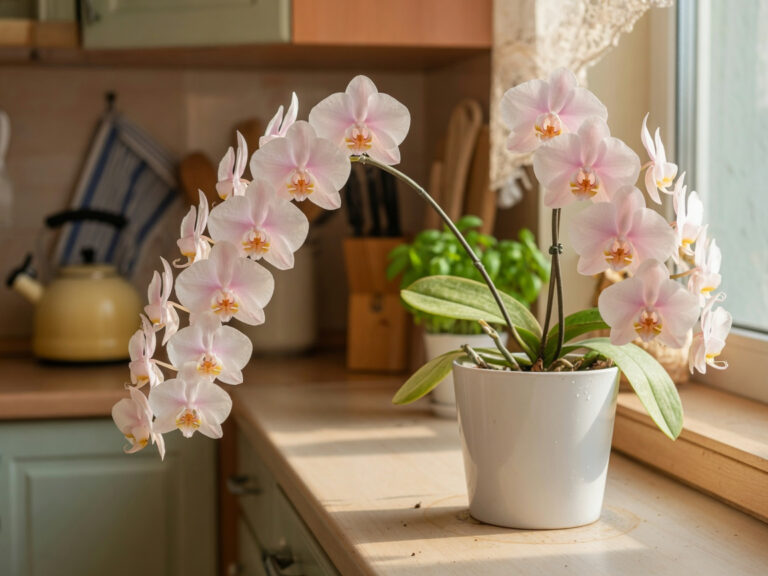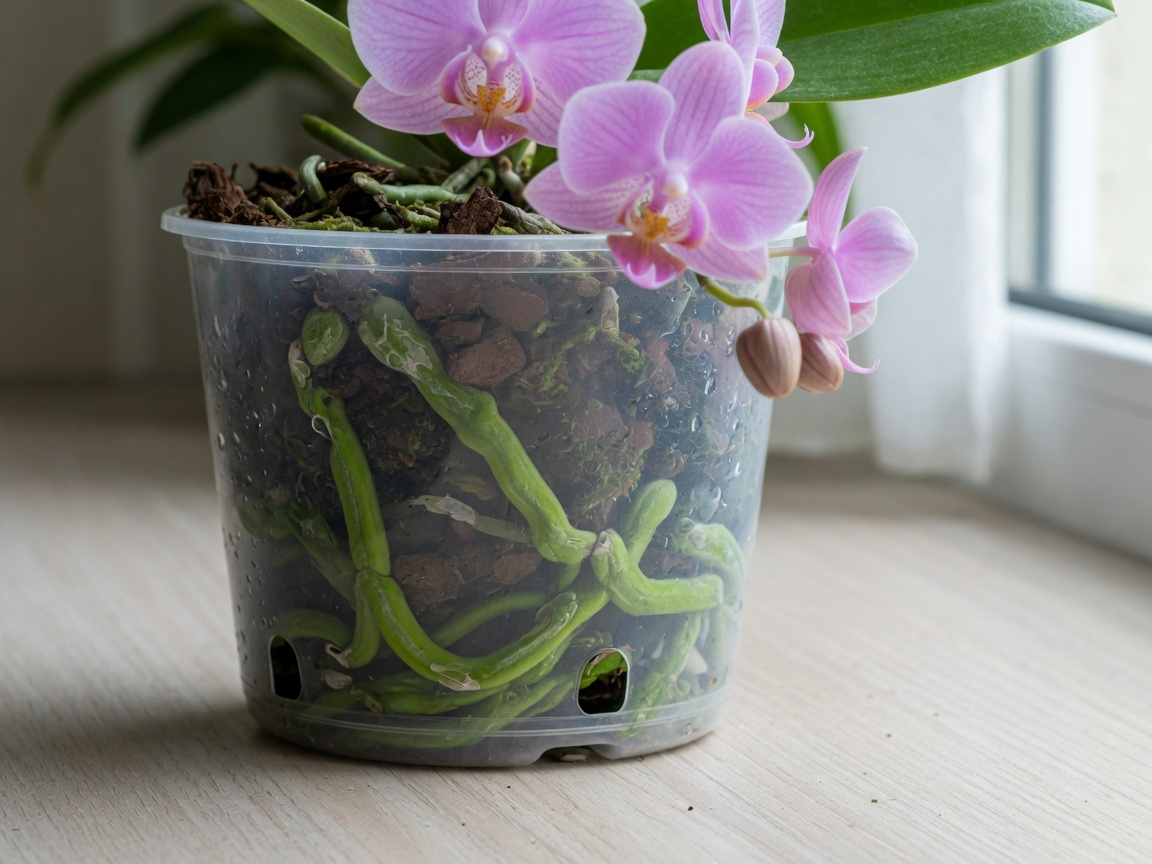

Promoting orchid root growth is simpler than most people think — it comes down to correct watering, the right temperature, and the nutrients your plant actually needs. Healthy orchid roots are bright green when wet, silvery-grey when dry, and plump to the touch. Get those three fundamentals right, and new roots will follow.
Some of the links in this article may be affiliate links. If you make a purchase through these links, we may earn a small commission at no extra cost to you. Thank you.
Whether you are nursing a struggling plant back to health or simply want to encourage a thriving orchid to grow even stronger, this guide covers every practical technique you need — from adjusting your watering habits to choosing the right growing medium and knowing when to repot.
Key Takeaways
- Orchids produce most new roots in spring and summer; heat mats can extend this window through cooler months
- Overwatering is the number one cause of root rot — always check root colour before watering rather than following a fixed schedule
- Phosphorus and potassium are the key macronutrients for root strength; always dilute fertiliser to at least half strength
- Kelp and seaweed extracts supply natural plant hormones (auxins and cytokinins) that directly stimulate new root production
- Repotting into fresh bark or sphagnum moss every one to two years refreshes the root environment and consistently triggers new growth
Why Are Orchid Roots So Important for Plant Health?
Orchid roots do far more than simply anchor the plant in its pot. For epiphytic orchids like Phalaenopsis — the most popular houseplant orchid — roots are the primary organ for absorbing both water and dissolved nutrients. In their natural tropical habitat, these plants cling to tree bark and exposed surfaces, drawing moisture directly from humid air and passing rainfall through an extraordinary root structure.
The secret to this ability lies in a sponge-like coating called velamen — a layer of specialised cells that wraps around each root and absorbs water very rapidly. This is why orchid roots change colour so reliably: when saturated with water, they appear bright green; when dry and ready to absorb, they turn silvery-grey as air fills those same cells. Understanding this colour signal is one of the most practical tools any orchid grower can develop, because it tells you exactly when to water — no guesswork required.
Roots also serve as a storage organ, holding reserves of water and nutrients the plant can draw on between waterings. When root numbers decline through rot, drought damage, or neglect, the orchid’s ability to hydrate and feed itself drops accordingly. Many orchids that were once strong bloomers gradually decline because their root system has been quietly deteriorating for some time. If your plant has already lost most of its roots, the detailed guide on bringing a rootless orchid back to health walks you through the full recovery process step by step.
How Do You Identify Healthy Versus Unhealthy Orchid Roots?
Being able to read your orchid’s roots at a glance is genuinely one of the most useful skills in your growing toolkit. Clear plastic nursery pots make this much easier, and if yours is planted in an opaque container, it is worth repotting into a transparent one so you can monitor root condition without disturbing the plant every time.
Signs of healthy roots include:
- Plump and firm texture — they feel turgid when gently squeezed, with no soft or hollow spots
- Bright green immediately after watering — the velamen fills with water and turns vivid green throughout
- Silvery-grey between waterings — a completely normal sign that the root is dry and ready for the next watering cycle
- Visible growing tips — new roots show a slightly translucent, lighter-green tip indicating active extension
Signs of unhealthy roots include:
- Brown and mushy texture — the classic sign of root rot, almost always caused by overwatering or poor drainage
- Dry, shrivelled, and papery appearance — severe dehydration or heat damage
- Black or dark grey with no growing tip — dead roots that should be removed cleanly at the next repotting
Many growers also encounter unusual fuzzy growth on their roots and are unsure whether it is normal root hair or the beginning of mold. If you spot something unexpected, the guide on identifying fuzzy root growth and preventing mold will help you tell the difference and respond before it spreads.
What Environmental Conditions Stimulate Orchid Root Growth?
Temperature, light, and humidity work together to create — or block — the conditions in which orchids naturally produce new roots. Getting all three right is especially important when you are actively trying to encourage root development after repotting, root pruning, or recovery from root rot.
Temperature is the most influential factor. Most popular orchid varieties, including Phalaenopsis, grow roots most actively when the root zone temperature sits between 18–27°C (64–80°F). Below 15°C (59°F), root development slows noticeably — and in UK homes during autumn and winter, windowsill temperatures can drop considerably below this threshold. Positioning the plant in a warmer spot or using a propagation heat mat beneath the pot can make a significant difference during the colder months.
Light fuels the photosynthesis that ultimately powers root growth. However, during the early stages of root regrowth — immediately after repotting, for instance — it is advisable to reduce direct light exposure slightly. A plant directing energy into producing new roots does not benefit from the additional stress of high-intensity light at the same time. Bright, indirect light remains the consistent sweet spot for orchids at any stage.
Humidity plays a supporting role. A level of 50–70% suits most orchid varieties well and helps the velamen layer function correctly. In centrally heated UK homes, where indoor humidity regularly drops to 30% or below in winter, a pebble tray of water beneath the pot raises local moisture around the root zone without waterlogging the growing medium.
How Should You Water Your Orchid to Stimulate Root Development?
Watering is the single most critical factor in orchid root health — and the area where most growers go wrong. The goal is not a fixed schedule; it is a consistent moisture cycle: water thoroughly, then allow the medium to dry almost completely before watering again. Here is the method orchid specialists consistently recommend:
- Check root colour before every watering. Water only when the roots appear silvery-grey. Green roots still hold moisture and do not need more water yet — adding water at this point is the most common cause of root rot.
- Water thoroughly at the sink. Run lukewarm water through the pot for 20–30 seconds until it flows freely from all drainage holes. This saturates every root and flushes accumulated mineral salts from the medium.
- Drain completely before returning the plant. Allow the pot to drip freely for several minutes. Never place the orchid back into a decorative outer pot while water still sits at the bottom.
- Raise ambient humidity between waterings. A pebble tray of water beneath the pot keeps moisture around the roots without keeping them wet.
- Adjust frequency by season. Aim for every 7–10 days in spring and summer, reducing to every 10–14 days in autumn and winter when growth naturally slows.
Overwatering is consistently cited as the leading cause of orchid death among indoor growers. The rule is simple: when in doubt, wait another day and check the root colour first.

Which Nutrients and Fertilisers Best Support Orchid Root Growth?
Feeding your orchid correctly gives it the raw materials it needs for strong root development. While nitrogen (N) drives leafy, vegetative growth, it is phosphorus (P) and potassium (K) that matter most when your focus is on roots. Phosphorus supports cell division and energy transfer within root tissue, promoting both new root production and the structural strengthening of existing ones. Potassium assists with osmoregulation — the ability of cells to manage internal water pressure — which keeps roots firm and resilient.
| Fertiliser Type | N-P-K Ratio | Best Use | When to Apply |
|---|---|---|---|
| Balanced orchid feed | 20-20-20 | All-round maintenance | Year-round, every 2–4 weeks |
| Bloom & root booster | 10-30-20 | Root development and flowering | Spring and summer |
| Low-nitrogen formula | 6-30-30 | Root strengthening | Autumn and winter |
| High-nitrogen grow formula | 30-10-10 | Leafy recovery after repotting | Immediately after repotting |
A few important rules apply regardless of which fertiliser you choose. Always dilute to half or quarter strength — orchids are famously light feeders, and full-strength fertiliser reliably causes root burn. Always apply fertiliser to already-moist roots, never dry ones. And flush the growing medium with plain water monthly to clear any salt accumulation that would otherwise block root uptake over time.
If you want to go beyond root development and encourage your orchid to produce multiple flower spikes, the wider care factors behind orchid blooming are explored in depth in the guide on optimising orchid blooming for multiple spikes.
Can Seaweed and Kelp Extracts Really Boost Orchid Root Growth?
Seaweed and kelp extracts have become a go-to natural supplement for orchid enthusiasts looking to give their plants a root-growth advantage — and the science behind them is well-grounded. These extracts contain naturally occurring plant hormones, including auxins (which stimulate root cell elongation) and cytokinins (which promote cell division and new growth). Unlike conventional NPK fertilisers, which supply macronutrients, seaweed extracts act as biostimulants — priming the plant’s own growth mechanisms from within rather than feeding it externally.
Application is straightforward. Most commercially available extracts are diluted at approximately 5ml per litre of water and applied as a root drench every 2–4 weeks during the growing season. They combine without issue alongside a balanced fertiliser schedule. Many growers who add kelp extract to their routine report visible new root tips appearing within a few weeks, particularly on plants that had been stalling with little visible root activity. Results naturally vary between individual plants and growing conditions, but the risk is very low and the potential benefit makes it well worth incorporating into your regular care routine.
Should You Use a Heat Mat in Winter to Encourage Orchid Roots?
In the UK, autumn and winter frequently bring cool windowsill temperatures that stall orchid root growth even when the rest of the plant looks perfectly healthy. A propagation heat mat placed beneath the pot maintains the root zone at the optimal temperature of 20–25°C (68–77°F) without heating the entire room — making it a practical and energy-efficient option for year-round root development.
For best results, choose a mat with a built-in thermostat so you can set a precise temperature and prevent overheating. A thin tile or folded cloth placed between the mat and the pot distributes heat more evenly across the base. Remember that warmth accelerates moisture evaporation from the growing medium, so check it more frequently when using a mat and adjust your watering schedule accordingly.
Heat mats are particularly valuable for orchids kept in a conservatory, porch, or on a north-facing windowsill — any location where ambient temperatures are lower than the main living space. One important exception: avoid using a heat mat on a plant already showing signs of root rot. Warmth combined with excess moisture accelerates decay rather than healing it, and the priority in that situation should be drying out the root zone, not warming it.
When and How Should You Repot and Prune Orchid Roots?
Repotting every one to two years is one of the most consistently beneficial things you can do for your orchid’s root health. Bark-based growing medium breaks down over time, becoming compact and water-retentive — the opposite of what orchid roots need. Refreshing the medium improves aeration and drainage, giving new roots the open, breathable structure in which they naturally grow best.
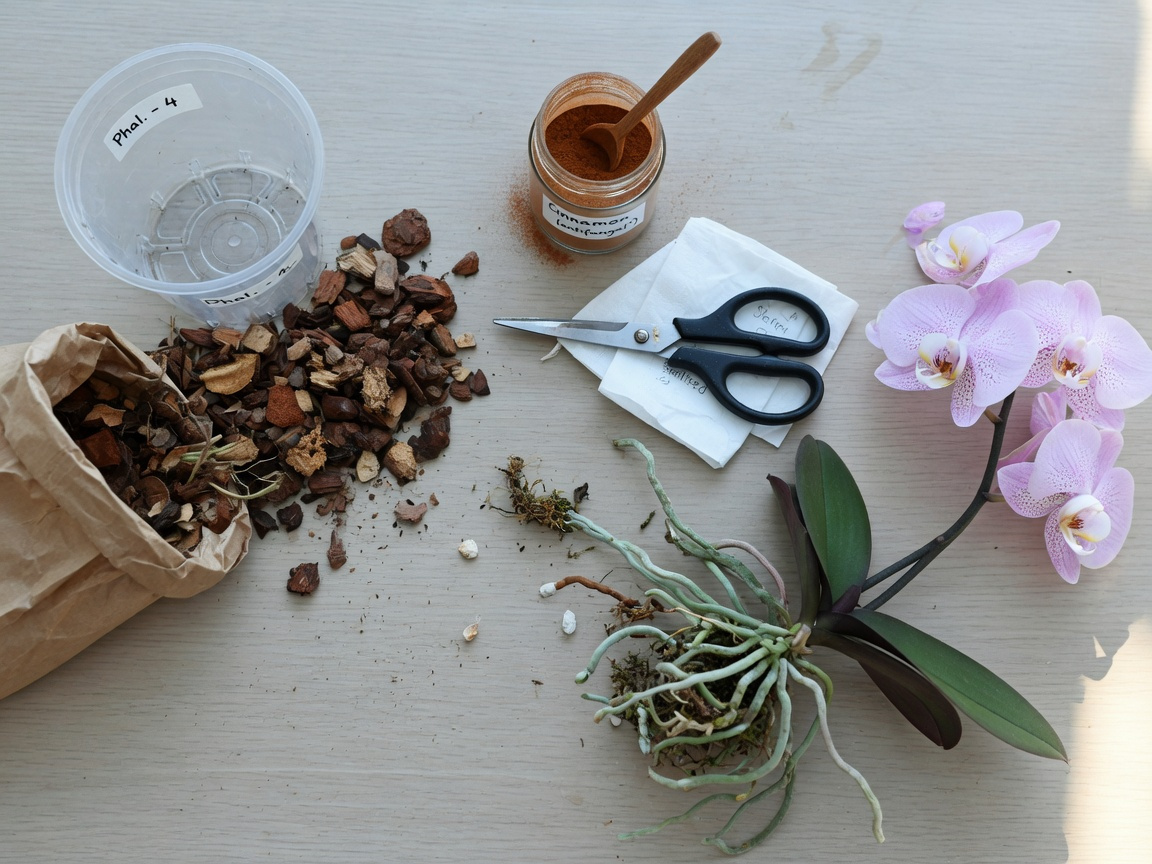
The ideal window for repotting is immediately after the last bloom drops, before the plant enters its next active growth phase. Gently tease the roots free of the old medium without pulling or forcing. Then inspect each root carefully, removing anything that is brown and mushy, completely hollow, or clearly dead, using clean sterilised scissors or secateurs. Dust cut root ends with cinnamon powder — a readily available natural antifungal that helps seal the wound and reduce the risk of infection. Pot into fresh bark or sphagnum moss, choosing a pot just slightly larger than the root ball. Orchids dislike being overpotted, as excess medium holds too much moisture around the roots.
Root pruning sounds counterintuitive, but removing dead or damaged roots reliably stimulates new root production. Clearing away non-functional tissue redirects the plant’s energy into generating fresh growth — much like deadheading spent flowers to encourage the plant to bloom again.
Which Growing Medium Is Best for Healthy Orchid Roots?
The growing medium your orchid sits in affects drainage, aeration, moisture retention, and how long roots remain wet between waterings — all of which directly influence root health and new root production. There is no single correct answer; the best medium depends on your growing environment, watering habits, and the specific orchid variety.
Bark chips are the most widely used medium for epiphytic orchids. Coarse bark provides excellent airflow around roots and drains freely after watering. The main limitation is that bark gradually breaks down and becomes denser and more moisture-retentive over time, which is why timely repotting matters. Sphagnum moss holds moisture considerably longer than bark and provides a softer environment that suits recovery situations and some orchid types particularly well. The trade-off is a higher risk of rot if conditions are cool and light is limited. Semi-hydroponic setups using lightweight expanded clay aggregate (LECA) offer very stable moisture levels and superb aeration, and are popular with experienced growers who want predictable, consistent results.
Whatever medium you choose, good drainage is non-negotiable. Roots that sit in stagnant moisture deteriorate quickly, while roots with good airflow around them grow vigorously and resist disease far more effectively.
What Orchid Root Mistakes Should You Avoid in 2026?
Understanding what not to do is just as important as knowing the best techniques. These are the mistakes that most consistently slow or prevent healthy root development in indoor orchids, and each one is entirely avoidable once you know what to watch for:
- Overwatering. By far the most common error. Always check root colour before watering; never follow a rigid daily or weekly schedule regardless of what you see.
- Using non-draining pots. Decorative outer pots without drainage holes trap water around the roots. Always grow the orchid in a clear nursery pot with drainage holes, nested inside any decorative container.
- Fertilising at full strength. Always dilute to at least half strength. The recommendation to use orchid feed at full label strength frequently appears on packaging, but orchids are light feeders and their roots pay the price for excess.
- Repotting too frequently. Disturbing the roots every few months prevents them from establishing. Repot every one to two years, or only when the medium has visibly broken down.
- Cold surfaces beneath the pot. A cold tile, glass shelf, or north-facing windowsill draws heat away from the root zone and keeps it below the optimal growth temperature. A cork mat or folded cloth beneath the pot makes a real difference at very little cost.
- Cutting or forcing back aerial roots. Roots that grow outside the pot are healthy and entirely normal for epiphytic orchids. They should never be pushed back into the pot or removed unless they are clearly dead. Our guide on promoting aerial roots through natural methods explains why above-the-pot roots are a positive sign and how to encourage more of them.
- Using standard potting compost. Regular multipurpose compost is far too dense for orchid roots. It holds water and restricts airflow in a way that reliably leads to rot within a season.
Frequently Asked Questions About Orchid Root Growth
Can I use a heating pad to stimulate orchid root growth?
Yes — heat mats are a genuinely effective tool for stimulating orchid root growth, particularly during cooler months when ambient temperatures slow development. Aim for a root zone temperature of 20–25°C (68–77°F). A thermostat-controlled mat is the safest option, as overheating can damage roots just as cold can suppress them. Remember that warmth causes the growing medium to dry out faster, so check moisture levels more regularly than you normally would.
How often should I water my orchid to promote root growth?
There is no single fixed interval that works for every plant and every home environment. As a general guide, water every 7–10 days during spring and summer, and every 10–14 days in autumn and winter. The most reliable approach is to check root colour before every single watering: silvery-grey roots are ready for water, while green roots still hold moisture and should be left for another day or two. This visual habit is far more accurate than any calendar-based schedule.
What natural remedies can promote orchid root growth?
Kelp and seaweed extracts are the most widely recommended and evidence-backed natural options. They contain auxins and cytokinins — plant hormones that directly stimulate root development — and are safe to use alongside a regular fertiliser routine. Cinnamon powder applied to cut root ends after pruning acts as a natural antifungal and helps protect the wound from infection. For other commonly cited home remedies such as banana peel tea or rice water, the horticultural evidence is limited, and results are inconsistent. Focusing on proven methods is a better use of your time.
Can over-fertilising my orchid hinder root growth?
Absolutely. Over-fertilisation causes salt to accumulate in the growing medium, which draws moisture out of roots through osmotic pressure — the opposite of what you want. The visible signs include yellowing or brown-tipped leaves, unusually stunted growth, and a white crusty residue on the medium or pot rim. If you suspect over-fertilisation, flush the medium with plain water three or four times in a row before resuming feeding at a lower dilution. Switching to a half-strength routine permanently is the best prevention.
Is it possible to propagate orchids through root cuttings?
Generally, no. Orchids do not propagate reliably through root cuttings in the way that many other garden plants do. The most common propagation method for Phalaenopsis is through keiki — baby plantlets that form naturally on nodes along the flower spike. You can actively encourage this by applying keiki paste to a node on an existing spike. If you would like to try making your own at home, the recipe for DIY keiki paste for promoting plant growth covers the ingredients and method in detail.
How long does it take for orchids to grow new roots?
Under optimal conditions — correct watering, warm temperatures, appropriate indirect light, and good humidity — most orchids begin producing visible new root tips within 4–8 weeks. A plant recovering from root rot or significant stress may take 2–3 months to establish a healthy new root system. Patience is essential: as long as the leaves remain firm and green and the plant shows no signs of active decline, root growth is very likely happening even when it is not yet visible from the outside.
Your Next Steps for Stronger Orchid Roots
Promoting healthy orchid root growth does not require specialist equipment or complicated chemistry. The fundamentals — reading root colour before every watering, maintaining warmth, fertilising at diluted strength, and repotting into fresh medium every couple of years — account for the great majority of results. Add a bottle of seaweed extract to your routine and consider a heat mat if your growing spot gets cool in winter, and you will have covered almost everything your plant needs.
Here is a simple starting timeline to work through:
- This week: Check your orchid’s roots. If they are green, hold off watering. If they are silvery-grey, water thoroughly at the sink and drain completely before returning the plant to its pot.
- Within the next fortnight: Begin a seaweed extract regimen alongside your regular watering. Assess whether your growing spot gets cold in winter and consider a heat mat if needed.
- Next repotting: Inspect roots carefully, prune anything dead or mushy, dust cut ends with cinnamon, and refresh with bark chips or sphagnum moss. This single step alone often triggers a noticeable flush of new root growth within weeks.
- Ongoing: Fertilise at half strength every 2–3 weeks during spring and summer, flush the medium with plain water monthly, and adjust your watering frequency as the seasons change.
Orchids are genuinely rewarding plants to grow well — and when their roots are healthy, everything else follows: stronger leaves, more flower spikes, and a plant that keeps coming back season after season. Give those roots the conditions they need, and they will do the rest.
“`