

Orchid care during blooming involves three key aspects: repotting, feeding, and watering. Repotting orchids is typically done during active growth or after blooming. However, exceptions can be made for newly acquired orchids or those with healthy roots. If root rot is present, immediate repotting is necessary, but caution must be exercised to avoid damaging flower stems. Repotting itself does not directly affect blooming, but it is important to provide orchids with the right fertilizers during this phase. Fertilizers high in phosphorus and low in nitrogen are ideal for supporting orchid growth during blooming. It is also important to adjust the frequency and strength of fertilization based on the blooming and dormant stages. When it comes to watering orchids during blooming, it is best to follow the usual practice of allowing the roots to partially dry out between waterings. Consistent and proper care during the blooming stage is crucial for the long-term health of orchids and to ensure future blooms.
Some of the links in this article may be affiliate links. If you make a purchase through these links, we may earn a small commission at no extra cost to you. Thank you.
Orchid Repotting Guidelines
The guidelines for orchid repotting address the best time to repot, exceptions to repotting during blooming, signs of root rot, the potential impact of repotting on blooming, and the importance of avoiding damage to flower stems during the process.
When to re-pot orchids depends on their growth stage, with the ideal time being during active growth or after blooming. However, there are exceptions to this rule, such as newly purchased orchids and those with thick roots, like Phalaenopsis orchids.
Signs of root rot, such as wrinkly leaves and dark, mushy roots, indicate the need for immediate repotting.
It is important to note that repotting does not necessarily affect blooming.
Care must be taken during the repotting process to avoid breaking flower stems, as this can hinder future blooming.
Fertilizing for Blooming Orchids
Fertilizing orchids while they are blooming involves adjusting the frequency and strength of the fertilizer based on the growth stage. Orchids still require nutrients for growth even when they are in bloom. It is important to mimic the natural habitat of the orchids by providing more nutrients during the growing season and less during the dormant stage. A fertilizer high in phosphorous and low in nitrogen is recommended for blooming orchids. The frequency and strength of fertilization should be adjusted to meet the nutrient requirements of the orchids at different stages.
To emphasize the importance of adjusting the fertilizing frequency and nutrient requirements, the following table can be used:
| Growth Stage | Fertilizing Frequency | Nutrient Requirements |
|---|---|---|
| Blooming | Adjusted frequency | High phosphorous, low nitrogen |
| Dormant | Reduced frequency | Lower nutrients |
By following these guidelines, orchid owners can provide the necessary nutrients for their blooming orchids while promoting optimal growth and future blooms.
Proper Watering Techniques
Proper watering techniques for maintaining healthy orchids involve mimicking natural watering patterns and allowing the roots to dry out between waterings. Orchids should be watered as usual during blooming, without the need for extra watering. Watering frequency should be based on the specific needs of the orchid species and the environmental conditions.
It is important to avoid overwatering, as this can lead to root rot and other issues. Allowing the roots to dry out between waterings helps to prevent waterlogged conditions and promotes root hydration. Mimicking natural watering patterns ensures optimal orchid health and growth.
No special watering requirements are necessary during the blooming stage, but maintaining proper watering techniques is crucial for the long-term health and future blooms of orchids.
Addressing Root Issues
Addressing root issues is crucial for maintaining the long-term health and vitality of orchids, ensuring optimal growth and future blooming. Preventing root damage is essential to preventing the development of root rot, which can significantly impact the overall health of the plant. Common signs of root rot include wrinkly and dehydrated leaves, dark, mushy roots, and green algae on the growing medium. To prevent root damage and rot, it is important to repot orchids with thick roots and those showing signs of root rot. Many people tend to overlook root problems in favor of the flowers, but paying attention to the root system is essential for long-term orchid growth. By addressing root issues promptly, orchids can thrive and continue to bloom beautifully.
| Preventing Root Damage | Common Signs of Root Rot |
|---|---|
| Repot orchids with thick roots | Wrinkly and dehydrated leaves |
| Repot orchids showing signs of root rot | Dark, mushy roots |
| Pay attention to the root system | Green algae on the growing medium |
Importance of Care During Blooming
Maintaining optimal conditions for orchids while they are in the blooming stage is crucial for their long-term health and future blooms. In addition to repotting, feeding, and watering, there are a few other important aspects to consider during blooming.
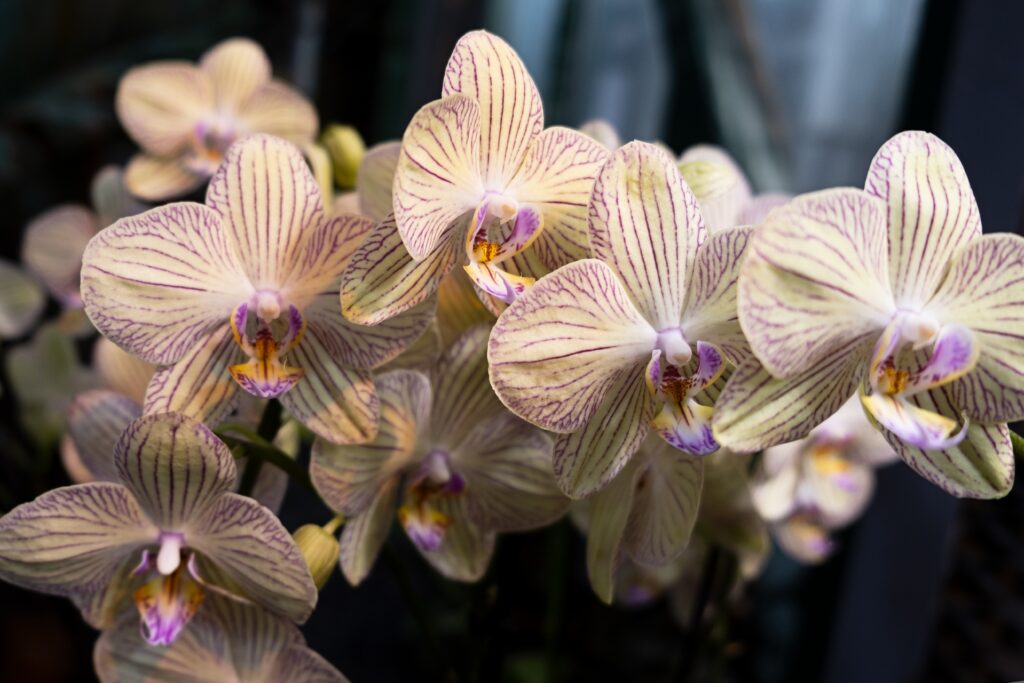
One of these is the importance of pruning. Pruning dead or dying blooms can help redirect the plant’s energy towards new growth and future blooms. It also prevents the accumulation of decaying matter, which can attract pests and lead to disease.
Another crucial aspect is pest control during blooming. Orchids can be susceptible to pests such as aphids, mealybugs, and spider mites. Regular inspection and proactive measures such as using insecticidal soaps or organic pest control methods can help prevent infestations and maintain the health and beauty of the blooming orchids.
Frequently Asked Questions
Can I repot my orchid while it is in full bloom?
Repotting orchids while they are in full bloom can be done, but it is generally recommended to repot during active growth or after blooming. This timing ensures optimal orchid health and minimizes the risk of damaging the flowers.
Should I use a different fertilizer for my blooming orchid?
Different fertilizers may be used for blooming orchids to provide alternative nutrients. It is recommended to use a fertilizer high in phosphorous and low in nitrogen to support growth and blooming. Mimicking natural habitat conditions is important for optimal orchid health.
How often should I water my orchid while it is blooming?
During the blooming stage, orchids should be watered as usual, allowing the roots to dry out between waterings. Mimicking natural watering patterns is important for optimal orchid health, with no special watering requirements during blooming.
What are the signs of root rot in orchids?
Signs of root rot in orchids include wrinkled and dehydrated leaves, dark mushy roots, and green algae on the growing medium. Preventing root rot involves repotting orchids with thick roots and treating affected plants with appropriate fungicides or by removing infected roots.
What are the consequences of neglecting root issues in favor of the flowers?
Neglecting root issues in favor of the flowers can have consequences for the long-term health of orchids. Root problems, such as root rot, can lead to poor nutrient absorption, stunted growth, and eventually, the death of the plant.