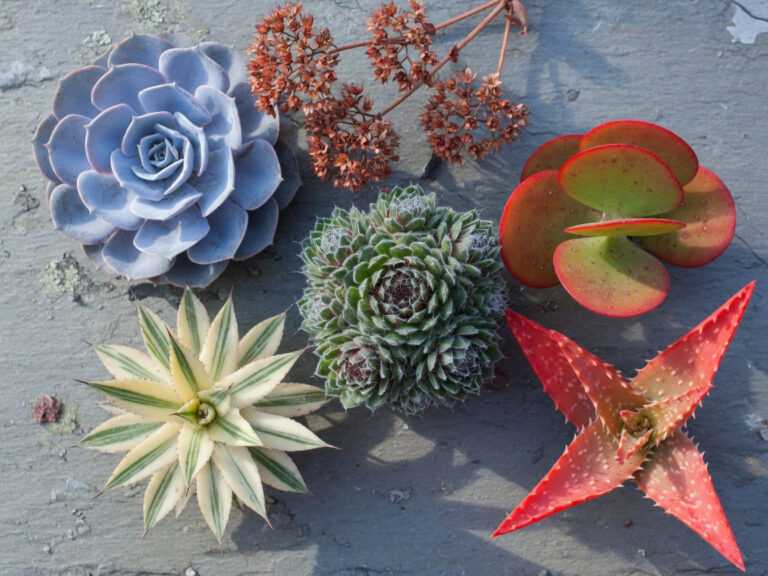
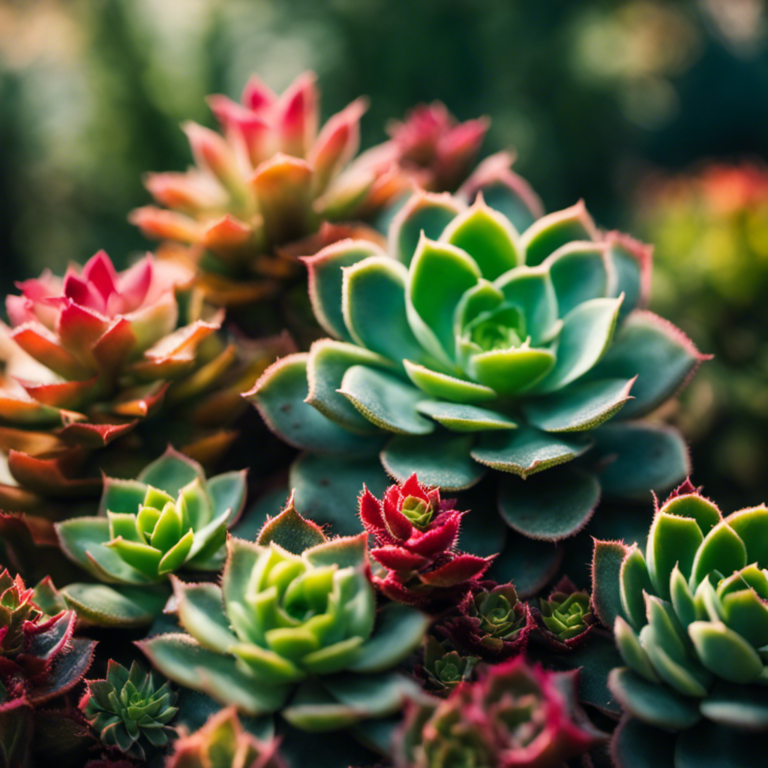
You can transform plain green succulents into a riot of reds, purples, and oranges — without a single drop of paint. Two proven methods drive this change: deliberate stress techniques that trigger the plant’s natural pigment production, and targeted LED lighting that delivers precisely controlled light intensity. Applied correctly, these approaches produce stunning colour shifts within weeks while keeping your plants completely healthy.
Some of the links in this article may be affiliate links. If you make a purchase through these links, we may earn a small commission at no extra cost to you. Thank you.
Key takeaways from this guide:
- Succulents produce anthocyanins and carotenoids under stress, generating reds, oranges, purples, and blues in their leaves
- Full-spectrum LED grow lights let you control light intensity precisely — without the sunburn risk of uncontrolled outdoor exposure
- Temperature swings, lean soil, and controlled drought are the safest and most effective stress levers available to home growers
- Applying stress during a plant’s dormant period delivers the best colour payoff with the lowest risk to long-term health
What Makes Succulents Change Colour? The Science in Plain English
Most people assume the colour of a succulent is fixed — the plant you bring home is the plant you keep. That assumption is wrong, and understanding why is the key to the whole process. Succulents carry pigment-producing machinery that sits largely idle under comfortable growing conditions. When environmental pressure mounts — intense light, cool nights, dry soil, or low nutrients — the plant interprets these signals as a survival challenge and ramps up the production of protective pigments in response.
The two primary pigment groups at work are anthocyanins (responsible for reds, purples, and blues) and carotenoids (which drive yellows, oranges, and pinks). Both function as a natural sunscreen, protecting leaf cells from photodamage and filtering wavelengths that could disrupt the plant’s photosynthetic machinery. Increased anthocyanin production is associated with high-light and low-temperature growing conditions — two of the easiest variables for home growers to manage deliberately.
It’s worth understanding from the outset that not every succulent carries equal quantities of these pigments. Species like Portulacaria afra (Elephant Bush) and Crassula tetragona stay stubbornly green regardless of stress level, because they simply don’t produce significant anthocyanin quantities. Meanwhile, echeverias, sedums, sempervivums, and aeoniums often shift dramatically from pale jade to deep scarlet within just a few weeks of consistent stress. Knowing which category your plant falls into before you start is the first practical step toward a successful colour programme.
Which Succulents Are Most Likely to Change Colour?
Before rearranging your grow-light setup, it pays to confirm whether your plant is a genuine colour-changer. Broadly speaking, succulents divide into high-pigment varieties that respond dramatically to stress and low-pigment varieties that remain green no matter what conditions you apply. Here are the best-performing candidates for colour enhancement in 2026:
- Echeveria varieties — Echeveria ‘Perle von Nürnberg’ blushes from lilac-grey to deep violet; E. agavoides ‘Romeo’ can turn near-black red under sustained stress
- Sedum rubrotinctum (Jelly Bean Plant) — tips flush red to vivid orange with minimal light stress, making it one of the most rewarding colour subjects for beginners
- Graptoveria ‘Fred Ives’ — shifts from muted purple-grey to striking copper-pink under bright conditions
- Aeonium arboreum ‘Zwartkop’ — deepens from dark burgundy to near-black in strong light; already dramatically coloured, it intensifies beautifully with consistent stress
- Sempervivum species — blush dramatically in cool winter conditions, ranging from soft rose-red to deep purple-blue depending on the cultivar
- Crassula capitella ‘Campfire’ — arguably the most spectacular colour-changer of all, transitioning its propeller-shaped leaves from fresh green to molten red-orange within weeks
If you’re uncertain about a specific variety in your collection, searching for its name alongside “stress colour” in succulent grower communities will usually turn up community-sourced before-and-after photographs from growers working in ordinary home conditions. That real-world evidence is often more practically useful than generalised advice, because it shows what’s actually achievable without specialised nursery equipment.
What Are the Four Core Stress Techniques for Enhancing Colour?
There are four primary stress levers available to home growers. Each triggers pigment production through a slightly different mechanism. Used in thoughtful combination during the plant’s dormant period, they produce the most dramatic colour shifts — but the golden rule is always to introduce changes gradually rather than all at once.
1. Light Stress
Increased light intensity is the single most powerful colour trigger for the majority of succulents. Moving a plant from a dim north-facing windowsill to a bright south-facing position can produce visible colour change within two to three weeks. The critical rule is gradual acclimatisation — aim to increase direct light exposure by around 30 minutes per day rather than making sudden jumps. Plants relocated too quickly from low to high light are the most common sunburn casualties in any succulent collection, and sunburned tissue is pale and papery rather than vividly coloured.
2. Temperature Stress
Cool nights are remarkably effective at boosting anthocyanin production. Moving succulents outdoors from late spring through autumn exposes them to natural day-to-night temperature variation that closely mimics conditions in their high-altitude desert habitats. The most vivid colour responses tend to occur when daytime temperatures sit around 25–30°C and night temperatures dip to 8–15°C — a 15–20°C daily swing. For most non-hardy species, avoid temperatures below 5°C; sempervivums are the notable exception and handle light frosts without difficulty.
3. Drought Stress
Cutting back watering frequency pushes succulents toward pigment production by creating a mild, controlled dehydration signal. During dormancy, many experienced growers water only once every three to four weeks. The key is staying this side of actual damage: if leaves become noticeably soft, wrinkled, or begin to drop in unusual numbers, it’s time for a drink. The growing medium you use matters enormously here too — a very porous, fast-draining mix dries more quickly and provides less nutritional cushioning, both of which act as useful stress signals. If you’re building a lean-soil approach from scratch, this thorough overview of choosing the right soil mix for succulent terrariums covers the key drainage ingredients and ratios in detail.
4. Nutrient Stress
Growing succulents in a low-fertility mix reduces the nitrogen available to the plant, which dials back lush green vegetative growth and allows other pigments to express more freely. This doesn’t mean starving the plant entirely — a light application of a low-nitrogen, high-potassium liquid feed once in spring supports healthy root development and flowering without suppressing stress-induced colouration. During the dormant period, withhold feeding altogether. The combination of lean soil and infrequent watering is a highly effective background stressor that works quietly alongside your light and temperature efforts.
How Does LED Lighting Help Bring Out Succulent Colours?
LED grow lights have transformed indoor succulent cultivation over the past decade. Unlike direct sunlight — which is variable, seasonal, and impossible to fine-tune — LEDs let you set both spectrum (the precise wavelengths delivered to the plant) and duration (how many hours of light per day) with complete accuracy. That precision makes them the safest available tool for colour-stressing succulents in an indoor environment, because you can define an exact intensity ceiling and hold it consistently day after day.
Full-spectrum LED panels emphasising blue light (400–500 nm) and red light (600–700 nm) work best for colour enhancement. Blue-spectrum light in particular stimulates anthocyanin synthesis — the same mechanism behind the vivid colouring seen in alpine plants exposed to intense UV at high elevation. Running full-spectrum LEDs at 12–16 hours per day should produce more consistent and repeatable colour outcomes than relying on ambient window light, primarily because the controllable intensity removes the variability introduced by seasonal weather and changing sun angles.
| Light Source | Spectrum Control | Sunburn Risk | Running Cost | Best For |
|---|---|---|---|---|
| South-facing window | None | Moderate–High | Free | Acclimatised plants |
| Full-spectrum LED panel | High | Very Low | Low | Indoor colour enhancement |
| T5 fluorescent tube | Low | Very Low | Moderate | Seedlings and etiolation prevention |
| Direct outdoor sun | None | High without acclimatisation | Free | Hardy, fully acclimatised outdoor specimens |

What LED Settings Actually Produce Colour Change?
Getting the most from a LED grow-light setup comes down to three practical variables: intensity (managed via distance from the plant), duration (daily hours of light), and spectrum (the wavelength mix). Here is a clear step-by-step starting framework that works well for most colour-responsive species:
- Distance: Position your LED panel 20–25 cm above the succulent canopy as a starting point. Each week, reduce this by 2–3 cm until you reach a working distance of 12–15 cm. Never make sudden large jumps in intensity — gradual reduction mimics natural seasonal light changes the plant recognises.
- Duration: Begin with 10 hours of light per day. After two weeks without adverse signs, increase to 12 hours, then to 14 hours over the following fortnight. Most colour-responsive species reach peak pigmentation at 14–16 hours of daily light exposure.
- Spectrum: Choose a panel with a high blue-light component — a 5,000–6,500K colour temperature rating or a model with a dedicated UV channel. Avoid panels marketed purely for rapid vegetative growth, as these lean heavily toward red-spectrum output and can encourage leggy etiolation without the colour payoff you’re working toward.
- Rest period: Always give plants at least 8 hours of complete darkness per 24-hour cycle. Continuous light suppresses natural circadian signalling in succulents and can reduce pigment expression over time rather than enhancing it — the darkness period is not optional.
- Weekly monitoring: Check leaves every seven days for signs of bleaching or tip scorch. If pale white or dry brown patches appear on the uppermost leaves, raise the light immediately and reduce daily duration by two hours before reassessing.
As you increase light stress, pay close attention to how your plant responds across the board — not just in its colouring. Succulents often signal systemic stress through physical changes beyond pigment shift. If you notice small roots emerging from the stem above the soil line, it’s worth investigating what that means: succulent aerial roots can indicate the plant is searching for additional moisture or anchorage, and their appearance is a useful prompt to review your watering frequency alongside your lighting regime.
How Do You Prevent Sunburn While Still Stressing Succulents?
Sunburn is the single most common pitfall when colour-stressing succulents, and it’s deeply counterproductive: bleached, dead tissue masks the vivid pigmentation underneath and can permanently scar the plant’s appearance. Unlike a healthy stress flush — which shows as an even, gradual deepening of colour across the leaf surface — sunburn damage is patchy, dry, irreversible, and actively ugly. Preventing it costs very little effort relative to the damage it saves.
Signs of sunburn in succulents include dry, papery white or cream patches on the uppermost leaves receiving the most direct light. In more advanced cases, brown or black secondary infection develops in the compromised tissue as opportunistic pathogens move into the damaged area. The following precautions significantly reduce sunburn risk:
- Acclimatise plants gradually — increase outdoor or windowsill light exposure over at least two to three weeks before reaching full exposure
- Use 30–40% shade cloth during peak midday sun hours in summer, especially when first moving plants outside for the season
- Rely on LED lighting for indoor programmes, where you set a precise intensity ceiling with no risk of unexpected intensity spikes from reflected light or unusual weather
- Water plants the evening before a planned increase in light exposure — well-hydrated cells tolerate heat and light stress significantly better than dehydrated ones
- Never move a succulent from deep indoor shade directly to full afternoon summer sun; this is the most common cause of severe, irreversible sunburn across the entire hobby
When Is the Best Time of Year to Apply Stress Techniques?
Timing is one of the most overlooked variables in succulent colour work. Applying heavy stress during active growth — typically spring and early summer — risks interfering with the plant’s investment in new leaves, roots, and reproductive structures. The safest and most productive window is the dormant or semi-dormant period, which for most commonly grown succulents falls in mid-to-late autumn and winter.
During dormancy, the plant is not actively pushing new growth, which means reduced water and nutrients won’t trigger unwanted leaf drop or developmental stunting. Natural temperature stress is also freely available in temperate climates at this time of year without any additional effort. Many experienced growers move succulents to an unheated greenhouse or sheltered cold frame from October through February, where nights regularly dip to 5–10°C. Combined with reduced watering and a full-spectrum LED running on a 12-hour timer, this dormant-period approach consistently produces the most saturated, long-lasting colours of any technique available to home growers.
One thing worth monitoring carefully when running any stress programme is whether the plant’s responses remain within normal parameters. If your succulent begins behaving unexpectedly — producing unusual blooms at an off-season time, for instance — it’s worth understanding the difference between a healthy stress response and a sign of genuine plant distress. Knowing what causes succulent death blooms is useful background knowledge here, as stress-triggered monocarpic flowering is occasionally confused with signs of poor plant health by newer growers.
How Long Does It Take to See Colour Changes in Succulents?
The timeline for colour change varies considerably by species, the intensity of stress applied, and the plant’s starting conditions — a deeply shaded plant moved to bright light will show faster initial change than one already in moderate light, for example. As a general working guide for 2026 growers:
- Visible blush or initial tint change: 1–3 weeks from the start of light or temperature stress in highly responsive species like sedum rubrotinctum or echeveria
- Moderate colour shift (e.g. green to mid-pink or orange): 3–6 weeks of consistent, combined stress conditions
- Full dramatic colour transformation: 6–12 weeks with a sustained programme combining light, temperature, and drought stress across the dormant period
- Colour maintenance: Ongoing — stress colour begins to fade back toward green within 2–3 weeks if stress conditions are removed or significantly relaxed
That last point deserves emphasis: stress colour is a dynamic, living response — not a permanent change to the plant’s pigmentation. Moving a brilliantly red echeveria to a dim corner of the house will see it slowly revert to green over the following weeks as the plant resumes comfortable conditions. This reversibility is actually reassuring: it confirms you can dial colours up and down without permanently altering the plant, and it also means maintaining vibrant colour requires maintaining the conditions that produced it. A simple grow journal — even a few lines per week noting light settings, temperature range, watering, and a rough colour score — is the most practical tool you can use to make this process repeatable.
What Are the Risks of Over-Stressing Succulents — and How Do You Recover?
Moderate, well-timed stress applied to healthy plants poses very little long-term risk. The danger zone is when multiple high-intensity stressors are combined suddenly, or when stress techniques are applied to a plant already under health pressure from root rot, poor drainage, compacted soil, or active pest damage. Knowing the warning signs allows you to respond before any lasting harm occurs:
- Leaf drop in greater-than-usual numbers: A signal of excessive drought or heat stress. Reduce all stress factors immediately and offer a measured, thorough watering.
- Etiolation (stretched, pale, leggy growth): Paradoxically caused by insufficient light rather than too much. This tells you your light source is too far away or the daily duration is too short for the plant’s photosynthetic needs.
- Soft or mushy leaves: Almost always root rot rather than a stress colour response, typically resulting from overwatering combined with poor drainage. Address the root cause directly before resuming any stress programme.
- Papery white patches on upper leaves: Sunburn. Move the plant back from its light source and allow the damaged tissue to dry naturally — do not cut it away, as this exposes the tissue beneath to further damage and infection.
- Slowed or stopped growth during the active season: Expected during dormancy, but concerning at other times of year. Ease all stress factors and apply a light balanced feed to support recovery.
Healthy, well-established root systems are the best buffer against stress damage — they allow the plant to access moisture reserves and nutrients even under challenging growing conditions. Before embarking on an intensive colour programme, it’s worth taking a few minutes to check root health directly. This guide to cleaning and inspecting succulent roots walks through the process of identifying early rot or compaction issues before stress techniques have a chance to amplify any underlying vulnerabilities.
Your 8-Week Succulent Colour Enhancement Plan
Ready to put everything into practice? Here is a structured, week-by-week programme that combines light, temperature, and drought stress in a safe, graduated sequence. This plan is designed for a dormant-period application — ideally starting in October or November in the UK — using a full-spectrum LED panel and an unheated or cool room for overnight temperature stress.
- Week 1 — Set the foundation: Repot into a lean, well-draining mix if not already done. Water once, thoroughly, and allow full drainage. Position your LED panel 20–25 cm above the plant on a 10-hour daily timer. Establish your baseline by photographing the plant and noting its current colour score.
- Week 2 — Begin light intensification: Reduce LED distance to 18–20 cm. Withhold water unless leaves begin to soften noticeably. If possible, move the plant to a cool room overnight — 12–15°C is ideal.
- Week 3 — Introduce consistent temperature differential: Increase daily light to 12 hours. Maintain cool nights (10–15°C). Begin checking for early colour response — initial blush is typically visible at leaf tips and margins first.
- Week 4 — Sustain all stressors: Continue the cool-night regime. Do not water unless absolutely necessary. Most responsive species should be showing clear, visible colour shifting by this point.
- Weeks 5 and 6 — Peak stress phase: Increase light duration to 14 hours per day. Maintain drought and cool nights. Monitor closely each week for sunburn, unusual leaf drop, or any softening of leaf tissue.
- Week 7 — Assess and stabilise: Evaluate colour depth and overall plant health. If colours are developing well and the plant looks robust, maintain all current conditions. If any stress damage is present, raise the LED by 5 cm and offer a modest watering before continuing.
- Week 8 — Document your species-specific baseline: Photograph results. Record the exact light distance, daily duration, overnight temperature range, and watering frequency that produced your best outcome. This data becomes your personal playbook for repeating and improving the process next season.
Running this programme across two or three seasons with careful records transforms an intuitive hobby into a repeatable, improvable process. Growers who track their conditions consistently find they can predict colour outcomes for new varieties much more accurately, and can troubleshoot setbacks far more quickly than those relying on memory alone.

Frequently Asked Questions
Can every succulent change colour when stressed?
No — colour change depends entirely on whether the plant contains sufficient quantities of stress-responsive pigments such as anthocyanins and carotenoids. Species like Portulacaria afra (Elephant Bush) and Crassula tetragona remain green regardless of how much stress is applied, because they simply don’t carry meaningful anthocyanin-producing capacity. Echeverias, sedums, sempervivums, and graptoverias are among the most reliably responsive genera. Before committing to a full programme, searching for your specific variety’s stress colour history in grower communities will give you realistic expectations of what that particular plant can produce.
Are LED grow lights better than natural sunlight for colour enhancement?
For indoor growers, yes — and the reason is control. LED panels let you set a precise intensity ceiling and a fixed daily duration, eliminating the risk of uncontrolled spikes from reflected light, seasonal angle changes, or unexpectedly sunny days that cause sunburn before you’ve had time to respond. Outdoor growers with properly acclimatised plants can achieve excellent results with natural sunlight, but the process demands more attentive monitoring, particularly in climates with unpredictably intense summer sun. For beginners, starting with an LED indoors and moving to outdoor stress techniques once you understand your plants’ tolerances is the lowest-risk path.
How often should I water when applying stress techniques?
During dormancy-based programmes, most experienced growers water once every three to four weeks. In summer heat, slightly more frequent watering may be needed to avoid crossing from productive stress into genuine dehydration damage. The most reliable practical rule: wait until the top 2–3 cm of soil is fully dry, then water thoroughly and ensure complete drainage before starting the cycle again. Leaving water sitting in saucers is the most common cause of root rot in succulents and should always be emptied within an hour of watering — particularly important when plants are already under stress.
Will the colour fade when I stop stressing my succulents?
Yes. Stress colour is a dynamic, ongoing physiological response — not a permanent change to the plant’s pigmentation. Once conditions relax (more water, warmer temperatures, reduced light), plants gradually revert to greener colouring over two to three weeks as the stress signals diminish and the plant resumes normal comfortable growth. To maintain vibrant colour year-round, you need to maintain the conditions that produce it. The most sustainable long-term approach is a bright full-spectrum LED on a 12–14 hour timer combined with consistently conservative watering and cool overnight temperatures wherever possible.
Which succulents are most prone to sunburn?
Sedums and echeverias with thinner, more delicate leaves are particularly vulnerable, as their smaller leaf mass provides less thermal buffering against intense light spikes. Plants grown under low-light conditions — such as those bought from supermarkets, garden centres with dim indoor displays, or kept at a dim windowsill for extended periods — are at especially high risk if moved directly to full sun. They haven’t developed the protective surface waxes and structural adaptations present in fully acclimatised outdoor specimens. The consistent rule: always acclimatise over at least two weeks, regardless of how sun-loving a species is reputed to be.
Can I stress succulents in winter?
Winter is genuinely one of the best times of year for a colour stress programme. Most succulents are dormant, making them more tolerant of reduced water and low nutrients. Natural cool temperatures provide temperature stress with no additional intervention. Adding a full-spectrum LED on a timer during the shorter winter days — when ambient indoor light is at its weakest — completes the picture effectively. Many growers find that winter programmes, run consistently across the dormant period from October through February, produce the most intense and longest-lasting colours of the entire year.
Is there a risk of permanently damaging succulents through stress techniques?
Moderate, well-timed stress applied to healthy plants poses very little long-term risk. The genuine danger lies in combining multiple high-intensity stressors suddenly, or applying stress to a plant already weakened by root rot, overwatering, pest damage, or post-repotting recovery. The safest approach is always to introduce changes gradually, monitor weekly, and ease back at the first sign of trouble. Starting with a robust, healthy plant growing in a well-draining medium gives you the widest possible margin for safe experimentation — and means that even if you push too hard, the plant has the resilience to recover quickly when conditions are eased.