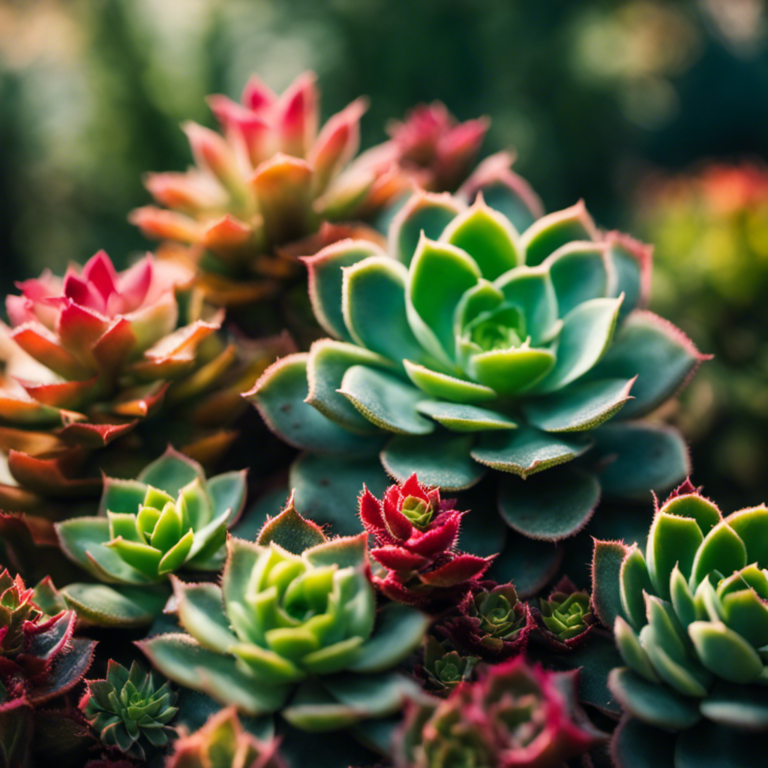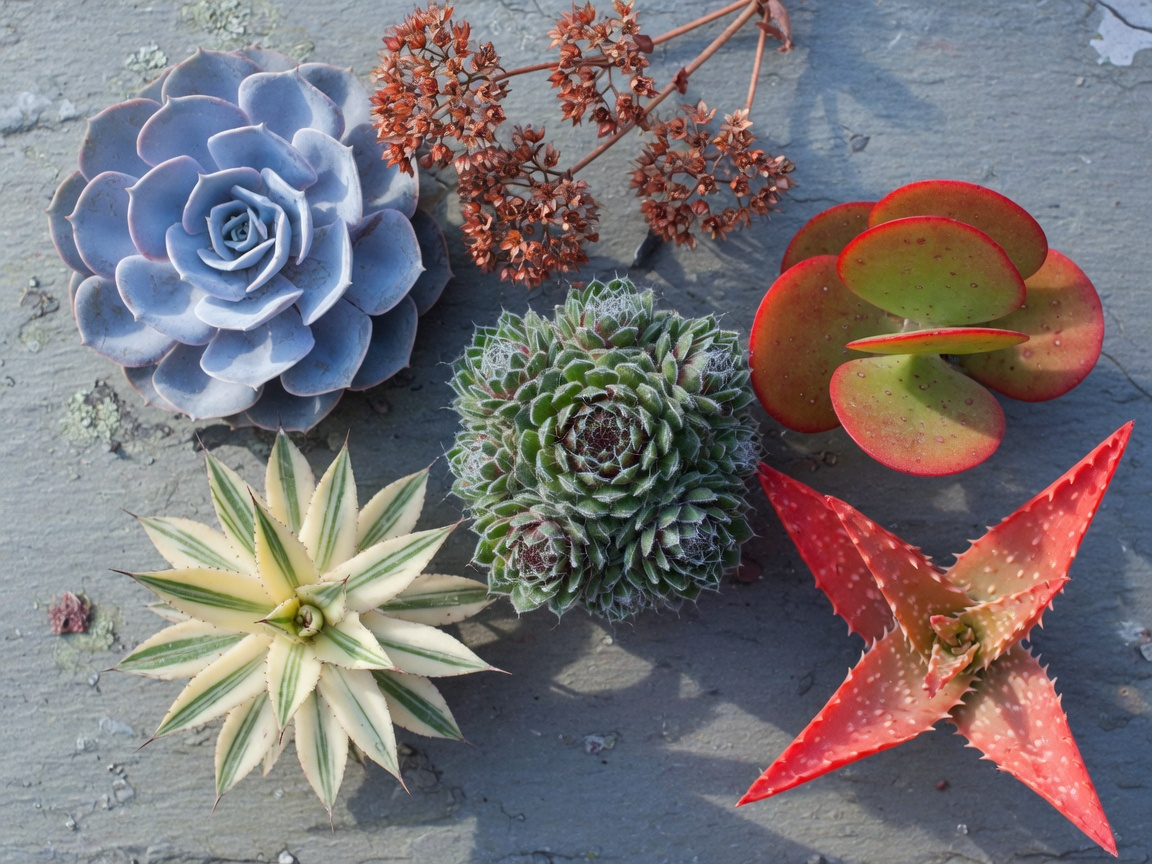

Winter succulents are cold-hardy plants that keep your garden looking alive and colourful when everything else goes bare. These six stunning varieties — including Echeveria ‘Blue Bird’, Sedum ‘Autumn Joy’, and the near-indestructible Sempervivum ‘Arctic Frost’ — thrive in chilly conditions and deliver vibrant colour, bold structure, and lasting visual interest throughout the darkest months of the year.
Some of the links in this article may be affiliate links. If you make a purchase through these links, we may earn a small commission at no extra cost to you. Thank you.
📋 Key Takeaways
- Fully cold-hardy varieties like Sempervivum ‘Arctic Frost’ and Sedum ‘Autumn Joy’ can survive temperatures below −30°C (USDA Zone 3), requiring zero winter protection in most UK and Northern European gardens.
- The six varieties featured here span every hardiness level — from fully frost-proof to light-frost-tolerant — giving gardeners flexible options across borders, containers, rock gardens, and indoor windowsills.
What makes winter succulents different — and why should you grow them in 2026?
Not all succulents are built for cold weather. Standard succulent species store water in their fleshy leaves as a strategy for surviving drought, but cold-hardy varieties go a significant step further. They produce compounds that function like natural antifreeze, lowering the freezing point of fluid in their cells and shielding delicate plant tissue from the ice crystal damage that kills most soft-leaved plants. It’s a remarkable piece of plant engineering that makes them genuinely viable in frost-prone British gardens.
Cold-hardy succulents are generally grouped into three practical hardiness tiers: frost-tolerant (surviving to around −2°C), frost-hardy (surviving to around −10°C), and fully winter-hardy (surviving below −15°C). Understanding which tier your chosen variety belongs to makes it easy to decide whether to plant in-ground or in portable containers you can move to shelter when severe cold threatens.
Garden design trends in 2026 are firmly pointing towards low-maintenance, year-round-interest planting. Traditional winter bedding plants like pansies remain popular, but more UK gardeners are turning to structural, drought-tolerant species that look compelling in every season. Winter succulents sit perfectly in this shift. They deliver sculptural form, bold colour, and impressive resilience — all with remarkably little input from you. Nurseries across the UK are responding in kind, expanding their ranges of cold-tolerant cultivars at a pace that makes this one of the best years ever to start a winter succulent collection.
Echeveria ‘Blue Bird’: the powdery blue-green gem
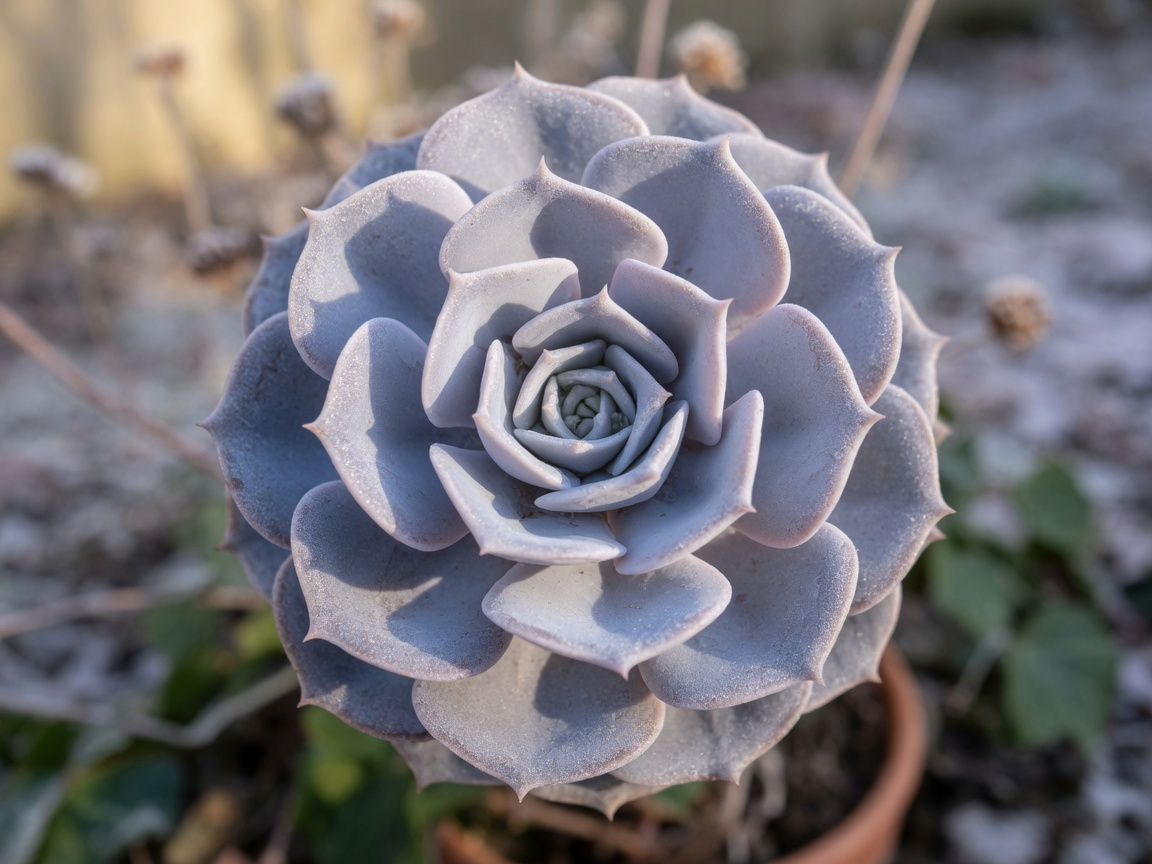
If you want a winter succulent that looks almost otherworldly, Echeveria ‘Blue Bird’ is the variety to reach for. Its tightly packed rosettes of powdery blue-green leaves catch the low winter light in a way that few other plants can match. Each leaf is coated in farina — a fine, dusty bloom — that gives the whole plant a frosted, jewel-like appearance that is perfectly suited to the season. It’s a living ice sculpture that asks very little of you in return for the effect it creates.
‘Blue Bird’ is a hybrid Echeveria that sits at the frost-tolerant end of the hardiness scale, handling temperatures down to around −2°C with ease. In sheltered UK gardens with reliably mild winters, it can remain outdoors year-round. In colder inland regions, it performs beautifully in containers that can be moved to a frost-free greenhouse or bright indoor windowsill when temperatures threaten to drop sharply. Come spring, it rewards your patience with elegant coral-pink flowers on long, arching stems — a delightful contrast against the cool blue foliage that makes it a multi-season performer.
Echeveria ‘Blue Bird’ — At a Glance
- Hardiness: Frost-tolerant to −2°C (USDA Zone 9+)
- Light: Full sun to bright indirect light
- Soil: Sharply draining gritty compost
- Winter watering: Once every 4–6 weeks maximum
- Best for: Containers, raised beds, indoor windowsills
Echeveria ‘Blue Bird’ belongs to one of the most visually diverse plant families in cultivation. If its rosette shape has caught your eye, you’ll find that rosette-shaped succulents offer an extraordinary array of forms, colours, and textures that stretch far beyond what most gardeners expect from a single plant family. The Echeveria genus alone contains hundreds of named cultivars, each with its own unique silhouette and colouring.
Sedum ‘Autumn Joy’: warmth and colour through the coldest months
Sedum ‘Autumn Joy’ — now often listed under its reclassified name Hylotelephium ‘Herbstfreude’ — is a winter garden classic for very good reason. This upright, clump-forming succulent produces large, flat-topped flower heads that open a soft pink in late summer, deepen to a rich rosy-red as autumn progresses, then transition to a warm copper-bronze that persists through the entire winter. Even after hard frosts, the dried seed heads remain standing, adding sculptural structure to bare winter borders long after every other plant has disappeared underground.
Sedum ‘Autumn Joy’ is rated fully winter-hardy to USDA Zone 3, tolerating temperatures as low as −40°C with absolutely no protection required. That places it among the most cold-tolerant succulents available to UK and Northern European gardeners. Plant it in a sunny, well-drained border and it will reliably return every spring — growing more impressive with each passing season as the clumps expand and the flower heads increase in size and density. Few other plants offer such a reliable four-season display for so little effort.
One of its most valued traits is its benefit for garden wildlife. The nectar-rich flowers attract butterflies, bees, and hoverflies from late summer right through October, while finches and sparrows visit the dried seed heads throughout winter to eat the seeds. Sedum ‘Autumn Joy’ demonstrates elegantly that low-maintenance and high-beauty are not mutually exclusive goals in the garden.
Sempervivum ‘Arctic Frost’: practically indestructible and undeniably beautiful
If you want a winter succulent you can plant and genuinely forget about, Sempervivum ‘Arctic Frost’ is your variety. Also known as Houseleeks or “Hens and Chicks”, Sempervivum plants are among the hardiest succulents on earth. ‘Arctic Frost’ lives up to its name completely, handling temperatures as low as −35°C with zero protection required — a fully winter-hardy USDA Zone 3 performer that will outlast almost any winter the British Isles can produce.
‘Arctic Frost’ forms tight rosettes of icy blue-green leaves trimmed with delicate silver-white margins. As winter deepens and temperatures fall further, the colouration becomes more vivid and crystalline, earning this plant its name with impressive accuracy. Individual rosettes spread naturally over time, producing clusters of smaller offset rosettes on short stolons throughout the growing season. A single plant can cover a container or stone trough in a living carpet of silvery rosettes within three to four growing seasons — all without fertiliser, fussing, or particular attention from the gardener.
💡 Did you know? Sempervivum species produce a natural mucilage gel in their leaves that is compositionally similar to Aloe Vera gel. European herbalists have used it for centuries to soothe minor burns and skin irritations — making these plants both ornamental treasures and practical household plants.
Agave Parryi ‘Snow Glow’: structural elegance with variegated drama
For sheer architectural impact in a winter garden, few plants rival Agave Parryi ‘Snow Glow’. This compact agave forms a tight, symmetrical rosette of broad, blue-green leaves edged with a creamy white margin and tipped with a distinctive dark spine. The striking variegation catches low winter light beautifully, creating the appearance of a living sculpture even on the dreariest grey January day. It’s the kind of plant that stops visitors in their tracks and prompts the question: “What on earth is that?”
Unlike some agave species that grow to enormous proportions, Parryi ‘Snow Glow’ remains compact — typically reaching 40–60cm in diameter — making it excellent for small gardens, patio containers, and gravel planting schemes where space is at a premium. It’s cold-hardy to around −15°C (USDA Zone 5b), which means most UK gardeners can leave it outdoors year-round in a sheltered, well-drained spot. The critical caveat with this variety is drainage: agaves dislike sitting in wet winter soil far more than they dislike cold, so free-draining growing conditions are absolutely non-negotiable.
The glaucous, silvery leaf surface of ‘Snow Glow’ reflects winter sunshine in a way that makes the plant look almost luminous when the light is right. Pair it with dark-leaved Ophiopogon or bronze-toned Sedums for a contrast planting that looks intentional and curated. If architectural, spined foliage appeals to you, the world of variegated cacti and desert beauties offers a similarly dramatic range of structural planting options to explore alongside your agave.
Kalanchoe Luciae ‘Flapjack’: bold paddles of winter colour
Kalanchoe Luciae ‘Flapjack’ — also called Paddle Plant or Desert Cabbage — is a genuine show-stopper in any winter garden setting. Its large, flat, paddle-shaped leaves are arranged in an open rosette and spend most of the year a cool silvery-grey to pale green. But as autumn temperatures drop and winter sunlight intensifies, the leaf edges flush a vivid coral-red to deep burgundy, creating a dramatic two-tone effect that looks almost hand-painted. This is one of the most visually arresting colour changes in the entire succulent world.
The colour transformation is triggered by a combination of cold temperatures and bright sunlight, which stimulates the production of anthocyanin pigments in the leaf edges — a protective stress response that also functions as a kind of natural sunscreen for the plant. Gardeners in northern climates often find their ‘Flapjack’ specimens are at their most spectacular in January and February, when the contrast between vivid red leaf edges and pale grey winter skies is at its most dramatic. The colder and brighter the conditions, the more intense the colouration.
Kalanchoe Luciae ‘Flapjack’ — At a Glance
- Hardiness: Light frost to −2°C; protect below this
- Light: Full sun — 6+ hours daily for peak colour
- Soil: Sandy, sharply draining
- Winter watering: Very minimal — once per month maximum
- Best for: Patio containers, conservatories, Mediterranean-style beds
Aloe Vera ‘Winter Red’: striking colour with genuine practical benefits
Aloe Vera ‘Winter Red’ is a cultivar selected specifically for its outstanding cold-season display. Unlike standard Aloe Vera — which tends to remain a steady, unspectacular green year-round — ‘Winter Red’ develops vivid scarlet-red leaf edges and intensified colouration as temperatures drop, creating a plant that looks almost backlit in low winter sunshine. It keeps the classic elongated, toothed Aloe leaf form but brings a colour intensity that firmly sets it apart from the straight species and makes it a genuine winter garden star.
Aloe Vera ‘Winter Red’ is cold-tolerant to around −5°C (USDA Zone 8), making it a viable outdoor plant in milder UK regions — particularly in coastal and south-western gardens where severe frosts are infrequent. In colder inland areas, it thrives beautifully as a container specimen that can be moved to a bright indoor position when temperatures threaten to drop below zero. On a south-facing windowsill indoors, it remains visually striking all winter, even if the cold-triggered red colouration is less intense without outdoor temperature fluctuations.
Beyond its ornamental appeal, Aloe Vera carries well-documented practical benefits that make it one of the few genuinely dual-purpose garden plants. Aloe Vera gel contains a range of active compounds — including vitamins, enzymes, polysaccharides, and amino acids — and is widely used as a topical treatment for minor burns, sunburn, and dry skin. Having a specimen within arm’s reach in the garden or on your kitchen windowsill provides a natural first-aid remedy at no extra cost or effort.
📊 All 6 Winter Succulents — Quick Comparison
| Variety | Min. Temp | Standout Feature | Best Use | Winter Protection? |
|---|---|---|---|---|
| Echeveria ‘Blue Bird’ | −2°C | Powdery blue rosettes | Containers, windowsills | Yes, below −2°C |
| Sedum ‘Autumn Joy’ | −40°C | Pink-to-bronze flower heads | Borders, wildlife gardens | None needed |
| Sempervivum ‘Arctic Frost’ | −35°C | Icy silver-edged rosettes | Rock gardens, troughs | None needed |
| Agave Parryi ‘Snow Glow’ | −15°C | Cream-edged variegated rosette | Gravel gardens, pots | Ensure drainage only |
| Kalanchoe ‘Flapjack’ | −2°C | Vivid red-edged paddle leaves | Patio containers | Yes, below −2°C |
| Aloe Vera ‘Winter Red’ | −5°C | Scarlet-edged green leaves | Pots, coastal gardens | Yes, below −5°C |
How do you care for winter succulents? A step-by-step guide
Caring for winter succulents is genuinely one of the easier gardening tasks you can take on — once you understand their core requirements. The most common mistakes are overwatering and poor soil drainage, both of which lead to the same outcome: root rot. Follow these seven steps to give your winter succulents the best possible chance of thriving through the colder months of 2026 and beyond.
- Choose the right location. All six varieties need as much direct light as possible, even in winter. Aim for a minimum of four to six hours of direct sunlight daily. South- or south-west-facing garden spots are ideal in the UK.
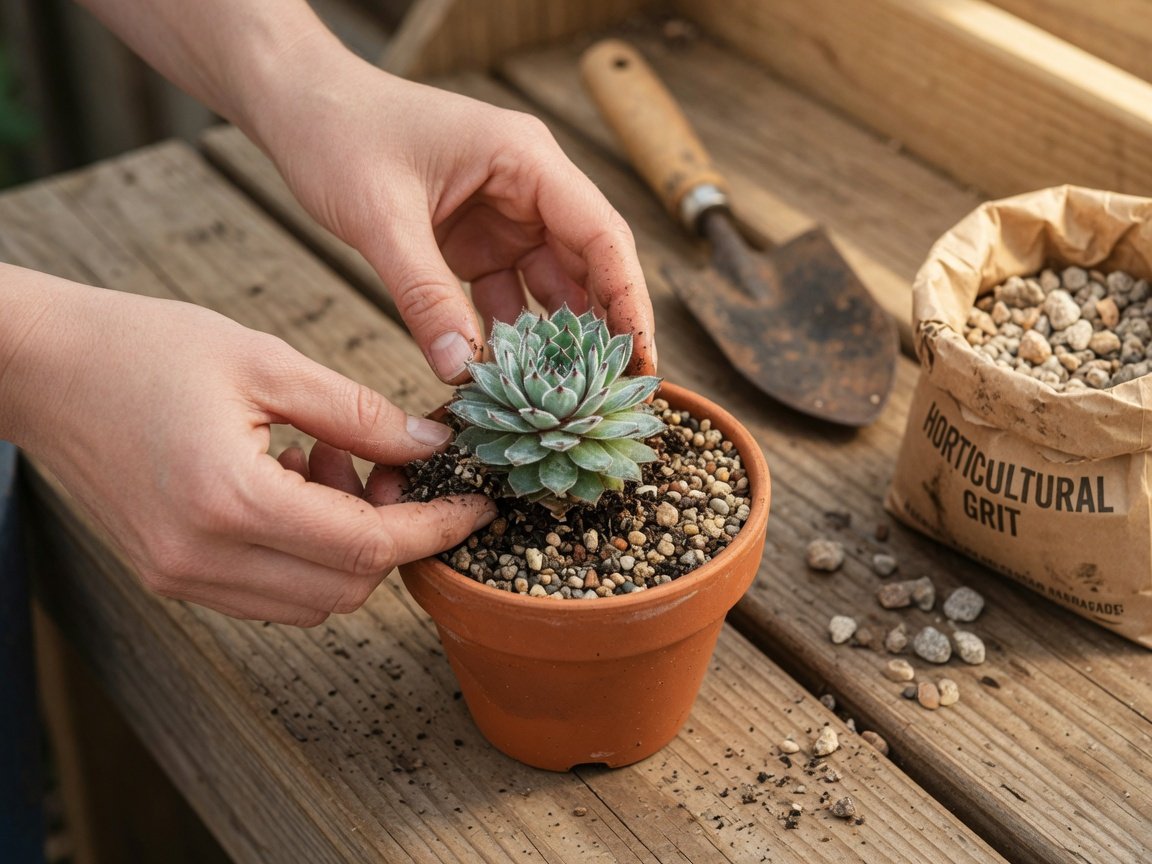
- Prepare the soil for drainage. Mix standard potting compost with at least 50% coarse horticultural grit or perlite. In heavy clay gardens, raised beds or containers are the most reliable solution — roots must never sit in waterlogged ground for extended periods.
- Plant at the right time. Late spring or early autumn are the ideal planting windows, giving roots time to establish before the arrival of summer heat or the hard frosts of deep winter.
- Reduce watering dramatically in winter. Limit watering to once every four to six weeks during the coldest months — and only if the soil has dried out completely. In wet UK winters, outdoor plantings may receive enough moisture from rainfall alone and need no supplemental watering at all.
- Consider bottom watering for container specimens. Instead of pouring water directly over rosettes (which can leave moisture trapped in the crown and cause rot), try bottom watering to encourage deeper root growth and keep foliage completely dry — a particularly useful technique for frost-tender varieties overwintered indoors on a windowsill.
- Protect tender varieties during hard frosts. Move containers of Echeveria ‘Blue Bird’, Kalanchoe ‘Flapjack’, and Aloe ‘Winter Red’ to a frost-free greenhouse or cool indoor space when temperatures are forecast to drop below −3°C. Sempervivum ‘Arctic Frost’ and Sedum ‘Autumn Joy’ need absolutely no protection.
- Hold off feeding until spring. Applying fertiliser to semi-dormant winter succulents encourages weak, soft new growth that is far more vulnerable to cold damage. Hold off entirely from October through to March, then resume with a diluted balanced liquid feed once you see fresh new growth emerging.
What are the most common mistakes with winter succulents — and how do you avoid them?
Even experienced gardeners sometimes struggle with winter succulents, usually because habits that work perfectly well for other garden plants are actively harmful to these drought-adapted species. Understanding the common pitfalls before you plant will save you a great deal of frustration and money.
⚠️ Important: The single biggest killer of winter succulents in UK gardens isn’t cold — it’s cold combined with wet. Most losses happen when frost-tolerant varieties are left in persistently waterlogged soil. Always prioritise drainage above everything else.
- Overwatering: Far more succulents die from too much water than too little. Metabolic activity slows dramatically in cold weather. Always check the top 2–3cm of compost before watering — if it’s not completely dry, wait another week and check again.
- Using the wrong compost: Standard multi-purpose compost retains far too much moisture for succulents in winter. Use a specialist cacti and succulent mix, or create your own by combining compost 50:50 with coarse horticultural grit or perlite.
- Insufficient light: Winter succulents need maximum light, especially during the short days of a northern winter. Etiolation — where stems stretch and lean noticeably towards a light source — is a clear sign of light stress. Move affected plants to a brighter position immediately.
- Ignoring hardiness ratings: Not all plants labelled “winter succulent” are equally cold-tolerant. Always verify the specific USDA hardiness zone rating for your chosen variety and compare it to your local minimum winter temperatures before planting in the ground.
- Planting the crown too deep: The junction between stem and root must sit at or just above soil level to allow air circulation. Planting too deeply traps moisture against the most rot-susceptible part of the plant and is a common cause of preventable losses.
As you build your collection and confidence with succulents, you’ll quickly discover how much variety exists within this fascinating plant group. Exploring succulents of all shapes and sizes is an excellent way to understand the full range of growth habits, care requirements, and aesthetic styles available before you commit to a full planting scheme for your garden.
What do 2026–2027 trends reveal about the future of winter succulent gardening?
The trajectory for winter succulent gardening is firmly and confidently upward in 2026, driven by three converging trends that show no sign of slowing. First, the sustained interest in low-maintenance, year-round garden interest is pushing more homeowners towards structural, drought-tolerant plants — and cold-hardy succulents suit this brief almost perfectly. The “living sculpture” aesthetic that has dominated RHS Chelsea Flower Show gardens in recent years is clearly filtering down into domestic gardens across the UK and beyond.
Second, climate adaptability is becoming a genuinely important consideration in plant selection. As UK winters alternate between mild stretches and sharp cold snaps in increasingly unpredictable patterns, plants that can handle a wide temperature range without constant monitoring are growing in value. Winter succulents — capable of handling both dry warmth and hard frost — are ideally positioned for a gardening landscape that homeowners can no longer predict with any real confidence from year to year.
Third, breeder activity is accelerating at an exciting rate. Specialist nurseries in 2026 are releasing new cold-hardy Echeveria crosses, Sempervivum cultivars with more dramatic winter colouration, and compact Agave varieties bred specifically for container culture in cooler climates. The diversity of the succulent world continues to expand in genuinely surprising directions. If you’re curious about how varied and unexpected this plant group can be, varieties like fuzzy succulents with their irresistibly velvety, touchable foliage show just how far the family stretches beyond the smooth rosettes most gardeners picture.
Frequently asked questions about winter succulents
Can winter succulents survive extremely cold temperatures?
Yes — but the answer depends on the specific variety. Sempervivum ‘Arctic Frost’ and Sedum ‘Autumn Joy’ are among the hardiest plants in cultivation, comfortably surviving temperatures below −30°C without any protection. More tender varieties like Echeveria ‘Blue Bird’ and Kalanchoe ‘Flapjack’ are best protected from temperatures below −2°C. Always check the USDA hardiness zone rating for your chosen variety and compare it to your local winter minimums before deciding whether to plant in the ground or in a portable container.
How often should I water winter succulents during the colder months?
Very infrequently. During winter, most succulents are semi-dormant and their water requirements drop dramatically. As a general rule, water no more than once every four to six weeks — and only if the soil has completely dried out. In wet UK winters, outdoor plantings may not need any supplemental watering at all, as rainfall alone will provide sufficient moisture. When in doubt, always wait. Drought stress is recoverable; root rot from overwatering usually is not.
Are these winter succulents prone to pests or diseases?
Winter succulents are generally very resistant to pests, but a handful of issues are worth knowing about before you plant. Mealybugs — small, fluffy white insects that hide in the tight crevices of rosettes — are the most common pest. Scale insects can also appear on Aloe and Agave species. Root rot from overwatering or poor drainage remains the most serious disease risk. Inspect your plants monthly during winter and treat mealybugs promptly with a cotton bud dipped in isopropyl alcohol, or use a targeted insecticidal soap spray for heavier infestations.
Can I grow winter succulents indoors?
Absolutely. All six varieties in this guide can be grown indoors successfully, provided they receive enough light. A bright, south-facing windowsill is the ideal indoor location. If your plants begin to stretch noticeably towards the light — a condition called etiolation — they need a brighter position or a supplemental grow light to prevent further distortion. Bear in mind that the stable warmth indoors means the dramatic cold-triggered colour changes of Aloe ‘Winter Red’ and Kalanchoe ‘Flapjack’ will be less pronounced than in outdoor specimens exposed to genuine temperature fluctuations.
Do winter succulents need special feeding during the cold months?
No — and feeding during winter is genuinely counterproductive. Succulents enter semi-dormancy as temperatures drop, and applying fertiliser at this stage encourages the plant to produce soft, weak new growth that is far more susceptible to frost damage and pest attack. Hold off entirely on feeding from October through to March, then resume with a diluted balanced liquid fertiliser (or a specialist cacti and succulent feed) once you see fresh new growth clearly emerging in spring.
Which winter succulent is best for a complete beginner?
Sempervivum ‘Arctic Frost’ is, without question, the most foolproof choice for first-time succulent gardeners. It’s virtually indestructible once established, requires almost no winter care, spreads freely to fill available space, and looks genuinely beautiful in rock gardens, stone troughs, wall crevices, and containers of all sizes. A single plant costs just a few pounds and can multiply into dozens of rosettes over two to three seasons entirely on its own. For a larger, bolder planting in a mixed border setting, Sedum ‘Autumn Joy’ is the ideal starting point — hardy, reliable, and rewarding from its very first summer in your garden.
Ready to transform your winter garden? Your 2026 action plan
Adding winter succulents to your garden is one of the most rewarding, low-effort improvements you can make this season. These six varieties — Echeveria ‘Blue Bird’, Sedum ‘Autumn Joy’, Sempervivum ‘Arctic Frost’, Agave Parryi ‘Snow Glow’, Kalanchoe Luciae ‘Flapjack’, and Aloe Vera ‘Winter Red’ — together cover every hardiness level, garden style, and aesthetic preference from minimalist and structural to dramatically colourful and wildlife-friendly. There’s a combination here for every garden and every gardener.
Here’s your practical four-week getting-started sequence to put it all into action:
- Week 1 — Assess your garden. Identify your sunniest spots with at least four hours of direct winter sunlight daily. Test your soil drainage by digging a small hole, filling it with water, and timing how quickly it drains — 30 minutes or less is ideal for succulents. Mark your best potential planting zones.
- Week 2 — Choose your varieties. If your garden experiences hard winters below −10°C, make Sempervivum and Sedum your backbone plants and treat the more tender varieties as container specimens you can bring under cover. For milder gardens, the full range of six varieties is open to you — mix cold-hardy and frost-tolerant cultivars for maximum visual interest across the season.
- Week 3 — Prepare your planting spaces. Mix plenty of coarse horticultural grit into your soil, construct raised beds if drainage is problematic, or set up containers with a gritty free-draining compost mix. Choose pots with generous drainage holes and consider raising them slightly off the ground on pot feet to prevent waterlogging from below.
- Week 4 — Plant and step back. Plant your chosen varieties at the correct depth, water in gently once, and then largely leave them to establish. Check monthly, water sparingly when the soil is bone dry, and enjoy watching your winter garden come alive with colour, texture, and structure precisely when everything around it is bare and grey.
The beauty of building a winter succulent collection is that it tends to grow on you — in both senses of the phrase. Once you witness how little effort these plants require for the visual rewards they deliver, you’ll find yourself wanting to add more. The succulent world is vast, endlessly varied, and genuinely one of the most exciting corners of horticulture to explore in 2026. Start with these six, master their care, and see where your garden takes you next.